
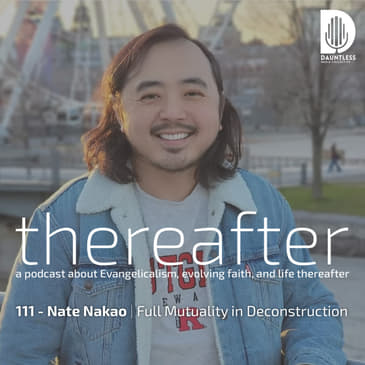


ok, friends. We've been way behind! The conversation you're hearing on this episode with Nate was actually recorded a few months ago and the intro is even from a few weeks ago. Life has been coming at us fast and we've simply been way behind on all things for the pod.
We're so glad to finally be getting this one out and can't wait for you to hear our conversation with Nate Nakao!
Nate is a hobbyist, activist, writer, nerd, ice hockey fan and coach, and a PC gaming enthusiast. For his 9-5, he works in media and marketing for the law school at a nationally recognized state university. Nate identifies as a cisgender, bisexual, Asian-American man.
https://fullmutuality.com/ and is a co-founder of Dauntless Media (https://dauntless.fm/) which is our podcast network!
We're so grateful to know Nate and get to work with him on so many projects. We hope you take the time to check out all his work after listening to today's episode!
If you enjoy listening to the show, please consider heading over to apple podcasts to rate and review us. If you really enjoy the show, we would love to see you in our Patreon.com/ThereafterPod! Also, look for us on social media and shoot us a message to say hello, or chat with us in Twitter spaces on Tuesday mornings in deconstruction coffee hour! Twitter: @ThereafterPod, @CortlandCoffey, @ThePursuingLife Instagram/Threads: @ThereafterPodcast, @CortlandCoffey, @ThePursuingLife
Bluesky:
https://bsky.app/profile/cortland.me
https://bsky.app/profile/thepursuinglife.bsky.social
[00:00:00] This is a Dauntless Media Collective podcast. Visit dauntless.fm for more content.
[00:00:32] Right now, there are some great discussions happening over in the Dauntless Media Collective Discord server.
[00:00:37] If you're interested in chatting with other folks who are deconstructing and decolonizing the oppressive traditions that they came from, please feel free to hop on into the server.
[00:00:46] If you don't know what Discord is, it's a place where communities can gather online for chatting on a wide variety of topics.
[00:00:53] In our Discord server, we have channels devoted to general deconstruction conversations, some meme sharing, therapeutic venting about whatever religious bullshit you're currently dealing with, and even a channel specifically devoted to talking about the latest episodes of the podcast you're listening to right now.
[00:01:09] I hope you'll join us. You can log in directly to the Dauntless server by clicking the link in the show notes or heading to dauntless.fm and clicking the link in the top banner. See you there.
[00:01:26] Okay.
[00:01:28] Welcome to the Thereafter podcast, a place where we explore life on the other side of faith change.
[00:01:35] We're here to break down the binaries, deconstruct the dualities, and wander through what it looks like to live in the gray.
[00:01:43] In church, we were told that life after leaving would be a bitter wasteland of unfulfilling hedonism, but we've discovered quite the opposite.
[00:01:52] There's actually a vibrant community of people on the other side of faith who are finding and co-creating space for hope and healing.
[00:02:01] Come along as we explore the all too often uncharted expanse of evangelicalism, evolving faith, and the life thereafter.
[00:02:24] We're back.
[00:02:25] Hi.
[00:02:26] We're still a podcast.
[00:02:27] In case you were wondering.
[00:02:30] Damn.
[00:02:31] I think we went into, I don't know about you.
[00:02:34] I crawled into a little hole after the election.
[00:02:38] And well, I mean, and I was traveling, I've been traveling, I've been really busy.
[00:02:41] Um, cause I was looking at the date we recorded this interview that we're going to share with you in October.
[00:02:47] Um, but I think we were just in a little post-election slump here, huh?
[00:02:52] Yeah.
[00:02:52] Yeah.
[00:02:53] I mean, I definitely think that that is it.
[00:02:55] And like, to be honest, here's the thing is like, I, I know that people love listening to this podcast.
[00:03:00] People tell us they love listening.
[00:03:02] I, and that's like part of the reason that we do it, but also like we, we do it because we enjoy making this content.
[00:03:12] And, and I think we've talked about before, like if at any point this becomes not enjoyable to do, like we don't want to do, like, I don't want to churn content because the machine requires it, you know?
[00:03:24] And I, I think that it's been hard to like make myself like want to like make content right now.
[00:03:32] Like, like it, it, there's just so much happening and so, so much heavy and not that that isn't always the case, I guess.
[00:03:41] I mean, it's just like, even saying that feels dismissive.
[00:03:44] Like it hasn't been heavy for five fucking years for so many people.
[00:03:47] Um, but.
[00:03:49] Well, and I just want to say that has nothing, that says nothing about the interview that we have in the case.
[00:03:54] Cause we have been wanting to get this out.
[00:03:56] Um, but yeah, I agree with you.
[00:03:58] It's been.
[00:04:01] It.
[00:04:01] Yeah.
[00:04:02] I, I mean, I don't know what else.
[00:04:04] It has been that way.
[00:04:05] It has been like, let's.
[00:04:08] And I also think the downfall of Twitter has kind of come with that and having Elon be so connected with, with Trump in the election.
[00:04:15] And I think all of our people seem displaced all over the place.
[00:04:19] We have people on threads.
[00:04:21] That was kind of cool for a while.
[00:04:22] Now that's kind of become influencer vibes.
[00:04:26] Um, and then, you know, I don't know if you saw Zuckerberg donated like a ton of money to the election too.
[00:04:32] Like, and I just, and people are on blue sky and it's, it's kind of like we're starting over again, you know?
[00:04:38] Yeah.
[00:04:38] Yeah.
[00:04:42] And we, and we don't know what's going to happen with TikTok.
[00:04:46] I mean, like currently we're in this like weird, like TikTok could like, like go away, like in like some slow dying fashion or it could get sold.
[00:04:55] And, and, and, but not the algorithm and therefore just be a completely different app, um, altogether.
[00:05:01] Um, like, like who knows?
[00:05:03] Like there's so much instability in just media and content in general.
[00:05:10] And I think that's kind of reflective in like, like I've been making fit check videos and shit posting on blue sky has been like, like what I've been doing because I, I have, it's been really, um, it's been difficult to get my head around the fact that.
[00:05:26] That, especially content, the content landscape and like having what happened with Joe Rogan and all these like kind of right wing podcast bros, um, in the, the, like the way that they played into the election as well with like young Gen Z men.
[00:05:43] Um, there's been a lot of, I think personally just discouraging aspects of the zeitgeist and, you know, content and whatnot.
[00:05:55] And again, not to say anything about this interview, this interview we recorded back in October when I was very full of hope in many ways.
[00:06:03] And I think I, I, I, we should have, I should have gone back and listened before we did the intro to, I think we even talk or make reference to like what, what's going to happen?
[00:06:12] What happens if like, you know, Trump wins again?
[00:06:14] And we're like, we don't even think about it.
[00:06:16] I know at one point we did say that on air or, or in one of our conversations, maybe it was clubhouse, but like, I mean, there was a part of me that like always thought it could happen.
[00:06:25] There was a part of me that like, didn't want to allow myself to even think about it.
[00:06:28] Um, and still we're in this like place of like, I, I really go back and forth between like sheer terror at like, you know, the trajectory of, of, of the global landscape.
[00:06:40] Um, and you know, feeling bits of hope, um, in between that.
[00:06:49] I'm a wild kiddler.
[00:06:51] My kids were at their dad's on election night.
[00:06:53] And so they came in my place the next day and my youngest was like, well, did you hear Trump won?
[00:07:00] And she goes, but on the bright side, he doesn't start being president until January.
[00:07:06] So we have some time.
[00:07:07] And so he's not president yet.
[00:07:09] And I was like, oh, to be 10 years old, that would be so great.
[00:07:14] Like to just see those silver linings and really feel like, you know, the next three months is an eternity.
[00:07:20] Cause it like, I mean, we're now in December and January is next month.
[00:07:24] Yeah.
[00:07:25] And not to turn this into a political podcast, but like it, it, it really is hard to even be like, you know, there used to be this like, well, you know, Trump is, you know, 130 years old and maybe he'll die.
[00:07:38] And, but then we get JD Vance and then we have this like very kind of like institutionalized right wing thing that is happening that feels even scarier than Trump.
[00:07:49] Right.
[00:07:49] Like the institution of MAGA that will be left behind, um, after Trump is gone feels somewhat terrifying.
[00:07:58] And the, the momentum that has been kind of like put behind, um, again, some of this young men, uh, uh, entourage that he's gathered around, uh, uh, himself is, is also very scary.
[00:08:15] I mean, I, I was talking to somebody the other day that said like, like, like I think that like young white men, privileged young white men are some of like the scariest people to me.
[00:08:26] Like it is, it's a relatively terrifying demographic of people.
[00:08:30] Um, when I find myself among a group of young straight, cis, hat, white men, um, because I just feel like there's a lot of just unprocessed bullshit in that demographic of person.
[00:08:45] And that's a terrifying group of people to be steering the ship.
[00:08:49] Um, so anyway, not to be, I guess, so, so pessimistic, but it feels like it transcends just this Trump is president.
[00:08:56] That feels like honestly, to some extent, uh, the, just a symptom at this point.
[00:09:03] I almost wish we would have just had Nate come back and join us for the intro.
[00:09:06] Cause like, just, we could do a whole episode just about that.
[00:09:12] And cause I know he's navigating a relationship to where, um, his wife is, is moving from Canada.
[00:09:18] And so I've seen her post about things.
[00:09:21] We want to have Gail on the podcast and we're, we can't wait to do that.
[00:09:24] And we're going to plan that soon.
[00:09:25] But, um, um, just posting about, um, the reasons that's happening.
[00:09:30] And, and I've seen some really, um, interesting information as she's processing that move too, um, after the election.
[00:09:37] And so, um, I'm, I'm looking forward to chatting with her.
[00:09:41] Um, but I also, this, this interview, I was so excited to sit down with Nate and I'm so excited to get this out.
[00:09:47] Um, because his story is out there.
[00:09:50] We've got other podcasts.
[00:09:51] And so he, he gives that summary, but you'll see as we dig in that we, we dig in a little bit deep and, and I, um, there's been some chatter online.
[00:10:00] I know Scott Okamoto published a sub stack that really is relevant and relate and relates, um, to some of the conversation that we have about the deconstruction community.
[00:10:09] And that's a conversation we've been having.
[00:10:11] And so I'm excited to have that out so that people who have interacted with Scott's work and have seen that article can also kind of see a little bit more context of some of the conversations we've been having behind the scenes about what's been happening with some of that influencer culture and all of those pieces too.
[00:10:29] Yeah.
[00:10:29] And hopefully that's a jumping off point for people listening.
[00:10:32] If you're not familiar with Nate's work and full mutuality and like all the other dauntless stuff that he is a part of, um, hopefully you'll jump into all of that from here.
[00:10:41] And if you are, hopefully this is like, you know, some deeper conversation into some other areas.
[00:10:47] That's not just his story and, but gets to center how his story impacts the work that he's doing and the way he's thinking now.
[00:10:54] So, um, yeah, I'm excited to get into it.
[00:10:57] Uh, we've like, like Megan said, we've been sitting on it and we are excited to get out in the world and hopefully be more consistent about publishing.
[00:11:05] We've got other stories and other interviews that we really want to tell on the pod.
[00:11:09] Um, now that we're kind of getting back into our group, we've got Christmas coming up.
[00:11:14] And, uh, once we get through that and new year's, uh, life should just, you know, be like super smooth sailing.
[00:11:21] Right, Megan?
[00:11:21] Yeah.
[00:11:22] Well, yeah, I need, we need some stuff to look forward to.
[00:11:25] So having some regular conversations on the dock with, um, folks that we love and care about would be a really great thing to look forward to come January.
[00:11:34] So, um, thanks for hanging in everybody and we really hope you enjoy this interview.
[00:11:40] Let's get into it.
[00:11:40] Let's go.
[00:11:45] All right.
[00:11:46] We're back.
[00:11:47] Another episode.
[00:11:48] We are so excited.
[00:11:50] We have a good friend and part of our Dauntless Network here with us.
[00:11:55] Nate, say hello.
[00:11:57] Hey, thanks for having me on.
[00:11:59] This is, this is long overdue, but I'm, I'm, I'm excited to start hanging out with you guys.
[00:12:04] He's one of the founders, one of the brain children of Dauntless Media Collective.
[00:12:09] Uh, so yeah, it's, it's an honor, a privilege and, uh, an exciting episode for us.
[00:12:15] It's an honor and privilege for me as well to, to hang out with you guys.
[00:12:20] So this will be fun.
[00:12:22] Hell yeah.
[00:12:23] We have things to talk about.
[00:12:24] We were already getting into shit, uh, as we were getting started to record and I was like, we've got to hit record and talk about this on mic.
[00:12:30] So, uh, so much to talk about Megan, do you want to give us some direction before I just ramble into some, some other direction?
[00:12:40] No, we're reframing the word ramble into wander.
[00:12:42] Remember this?
[00:12:44] So Nate, just to kind of kick us off, I would love for you to give our listeners just a little bit of context about who you are and kind of what your deconstruction has looked like up until this point.
[00:12:55] Yeah. So, um, I guess to, to make a long story, a long and meandering story, uh, as short as possible, um, and also to kind of give a plug for one of our other networked podcasts, um, hello deconstructionists hosted by Maggie.
[00:13:11] Um, I was just over there and I kind of gave like more of a fleshed out version of, of my story, but to, uh, to encapsulate it in a little bite, um, I started off, uh, essentially in the independent fundamentalist Baptist movement.
[00:13:28] Um, and it was the, the branch of that movement associated with Bob Jones university.
[00:13:34] So if anybody is not familiar with that world, um, the IFB or independent fundamentalist Baptist, um, they are like super hyper evangelical Baptists, um, that are big on this idea of biblical separation.
[00:13:55] And one of the ways that manifests is by cloistering themselves off, even from their evangelical brothers and sisters in that, you know, they have similar doctrines and similar theologies, but their practice is so, um, intensely conservative.
[00:14:17] Um, that they end up breaking fellowship with all of those people and creating for themselves organizations and institutions that develop sort of loose networks among all of their churches.
[00:14:32] Um, there is a documentary series on max, I believe that I would recommend if you, if you're ever curious about the IFB, um, it's called let us pray, but P R E Y.
[00:14:43] And it, uh, discusses a lot of the sexual abuse that went on within IFB churches.
[00:14:50] And that's a different branch of the IFB that's connected with Hiles Anderson college, but they are a very similar flavor to the, the group that I grew up in.
[00:14:59] Um, I left the IFB after almost 20 years of my life and, um, my family, my parents included moved to sort of the mainstream evangelical world.
[00:15:13] Um, cause we, we, we didn't, we didn't originate in IFB.
[00:15:17] My, uh, my, my dad actually grew up in sort of anomaly Buddhist house in Japan and my mom grew up in more of a mainstream evangelical world.
[00:15:28] And then we found our way into the IFB and then we all kind of left it, uh, together as a family.
[00:15:36] And then for several years, I was at that point.
[00:15:39] Um, so I can kind of like visualize.
[00:15:41] Sure.
[00:15:41] So I was, I believe 22 ish around there.
[00:15:48] I had just gotten back from, from college and I think it was within my first year after graduating college.
[00:15:55] So 22, 23 ish, um, was when my family left, um, the IFB.
[00:16:00] And we entered sort of mainstream evangelical Baptist light, um, the kind of Andy Stanley world I think is where, where we were for a little while.
[00:16:10] Um, and then I, uh, ended up getting a job as a children's minister at a Mark Driscoll style Acts 29 church.
[00:16:21] I mean, at the time they weren't, but while I was there, they got sucked into the Acts 29 world and, um, and what, you know, I worked there for just about five years.
[00:16:33] So just under five years.
[00:16:34] And, um, during that time period, I dove pretty heavily into the, the neo-Calvinist kind of cesspool.
[00:16:48] Young, rep-warmed, young, restless and reformed.
[00:16:51] Exactly.
[00:16:52] Exactly.
[00:16:52] Hell yeah.
[00:16:53] Hell yeah.
[00:16:54] Um, whiskey and cigars.
[00:16:55] Oh my God.
[00:16:56] Right.
[00:16:56] Uh, fundamentalism.
[00:16:57] Yep.
[00:16:58] And my, my boss, our, uh, our pastor, our lead pastor there, um, taught me how to brew beer.
[00:17:05] So, you know, that's, that's, that's right up their alley.
[00:17:09] Um, and, and I've, I've mentioned this in, in other places, but it was, it was always ironic to me that the church was on the doorstep of one of the cities here in New Jersey.
[00:17:20] That is predominantly black and Latino.
[00:17:23] There's a, it's, it's actually minority, very minority white.
[00:17:27] And that church had maybe two or three black people in it, five or six Asian people in it.
[00:17:35] And the rest were white.
[00:17:38] And their whole goal was to try to reach that city.
[00:17:42] Um.
[00:17:43] Psy-cultural.
[00:17:44] Mm-hmm.
[00:17:45] Yeah.
[00:17:45] Yeah.
[00:17:46] Yeah.
[00:17:46] Um, and, uh, then after, after I was, uh, asked to resign from that church due to who knows what it was.
[00:17:56] I, I, I have theories, but, um, none of them are substantiated because my exit meeting with, um, the executive pastor was very vague.
[00:18:06] And he sort of gave me the whole, um, either you resign and we draft a resignation letter or we fire you.
[00:18:18] And I was all about kind of saving face with my volunteers.
[00:18:23] So I'm like, okay, I'll, I'll resign.
[00:18:26] I'll sign this letter.
[00:18:27] And, um, I, I don't recall if that, if there was any form of like NDA in there, but even if there was, I wouldn't know what they were trying to, to hide.
[00:18:39] Um, but in any case, I don't even know what the, um, what the purpose of my, um, of my dismissal was.
[00:18:48] Um, but I was, I was young.
[00:18:51] It was sort of my first professional job as it were.
[00:18:57] Um, and yeah, so I, I left that, that church.
[00:19:02] And while I was there, I had kind of taken a few steps in a deconstruction of sorts.
[00:19:09] I mean, I feel like every transition from one form of Christianity to another for me was a deconstruction of sorts.
[00:19:17] And so I left that world and during that time period kind of, um, moved into and out of that Calvinist world and became sort of enamored with the idea of God is love.
[00:19:34] And if that's true, then all of this teaching about God's wrath and sovereignty and control couldn't be true.
[00:19:40] So, um, I got kind of caught up in more Wesleyan, Arminian thought for a little while.
[00:19:48] And, um, after I left that church, I found my way into, um, I mean, Hillsong NYC had just opened up like the year before or two years before.
[00:20:01] So I'm like, well, that's an easy church for me to go to and hide.
[00:20:04] Nobody's going to recognize me there because there's like almost 25,000 people attending this place.
[00:20:08] So, um, so I went there and, um, over time, you know, got caught up in the volunteer culture, um, ended up somewhat climbing the volunteer ladder at, um, at Hillsong.
[00:20:23] Um, my brother was one of the worship leaders at, at the church and, um, it became kind of easy for me to get into those leadership positions at Hillsong.
[00:20:37] Um, but after a while, I think part of it was that I was no longer on staff at a church.
[00:20:44] Um, and so I didn't have those kinds of constraints any longer so I could continue to explore.
[00:20:50] And that's when I started reading books that were really challenging, um, the evangelical construct and listening to a number of podcasts.
[00:21:03] And granted, I look back on that time period now and I think what small steps, but for me that it was all groundbreaking, you know, challenging any idea of hell, um, that, that the afterlife, um, is even that, that the idea of
[00:21:20] torment in the afterlife is even a thing.
[00:21:23] Um, so as that started happening in, in my brain and then I started kind of looking around at the, the world of Hillsong, um, that became kind of untenable.
[00:21:36] And the sort of, the things that were happening at Hillsong and there are documentaries and exposés, uh, just out the wazoo.
[00:21:45] So you can all, you know, everyone can go ahead and check that out.
[00:21:47] But like the, the stuff that was happening there prior to the Carl Lentz scandal, um, all of that was, was in, in my face and undeniable for me.
[00:22:01] So in 2017, I left Hillsong.
[00:22:06] Oddly enough, it was around the same time that Janice, uh, Legata, our good friend left, um, Hillsong.
[00:22:12] And I only knew her kind of peripherally.
[00:22:15] We had been in a couple of team meetings together.
[00:22:17] Um, she knew my brother pretty well, but I wasn't all that close to her.
[00:22:22] But then I stumbled on her blog a few years later, found the stories and that's when we connected and discovered each other on the other side of that, uh, that sort of Hillsong world.
[00:22:34] Um, but yeah, that's sort of the, the, the long and short of it basically.
[00:22:39] It is, it's amazing to find people to connect with after deconstruction, but to find people that were in the same settings that you were in and sitting in the same rooms with people that you were in.
[00:22:49] That's a different level of just being seen and feeling seen.
[00:22:53] I just had to say that when you said, you know, you were able to connect on the other side with Janice.
[00:22:58] Yeah.
[00:22:59] Yeah.
[00:22:59] Yeah.
[00:23:00] It was, um, it was one of those moments when we sort of finally touched base again.
[00:23:07] Um, and this was like after the Carl Lentz news dropped.
[00:23:12] Um, and it, it, it was this moment of like, Hey, do you remember me?
[00:23:17] Do you, do you remember?
[00:23:18] And like vaguely, you know, and then a little bit of back and forth and then just the floodgates opened.
[00:23:25] And it was this, this sort of cathartic, like, Oh my God, I listened to your podcast and you were talking about this shit that went down.
[00:23:33] And, you know, it was all of that stuff.
[00:23:36] And, and, um, it was, it was, it was healing and it really sort of kickstarted my own desire to process everything that had happened over the time period at Hillsong.
[00:23:46] And then even going further back into those other areas of my evangelical life.
[00:23:53] And then of course, you know, um, working with Janice on some of that stuff, then kind of opened the door to connecting with more people in this space, which led me to Scott and, um, his podcast, Chapel Probation, which I was like, that's kind of my wheelhouse.
[00:24:10] I graduated from one of those kinds of schools.
[00:24:13] So, um, in all of that, there was this, uh, time period when I was an undergrad at the Bob Jones university.
[00:24:24] I like how you, it's like, you say that like football players say the Ohio state, the Bob Jones university.
[00:24:33] Yeah.
[00:24:34] Or as, as we all like to call it now, the BJU, the BJU wonder what they're teaching at that school.
[00:24:43] Oh my.
[00:24:45] Um, yeah.
[00:24:46] So I would love, I mean, I would love to get into that aspect of, um, and you, you and Scott have both done multiple podcasts together.
[00:24:55] So more plugs for like, go look at all the different places across the podcast network where Nate and Scott have, you know, been across mics.
[00:25:06] Um, all of those conversations are great for more context.
[00:25:11] What I kind of want to like talk a little bit about and ask you is the thing you mentioned about like these kind of like small deconstructions each phase of the way.
[00:25:22] Right.
[00:25:22] And like these, um, transitions from, you know, cause I kind of, you know, can relate to like, I was like born and baptized into a little Baptist Southern Baptist church.
[00:25:34] And then like, it was like kind of rebellious to go to a Bible non-denominational Bible church, but still like, we didn't really talk about the Holy spirit.
[00:25:43] We didn't really do, you know, we didn't, you know, raise our hands during worship or anything crazy, but like, you know, we were, we were a little more free, so to speak.
[00:25:53] And then I got into like this charismatic church and like my like junior high, younger day, you know, and I was like, Holy shit.
[00:26:00] We're like speaking in tongues and dancing and doing all this stuff that we were told we were not supposed to do.
[00:26:05] And then kind of the Shane Claiborne, Bart Campolo, new, you know, new monastic, simple way, relevant magazine, you know, solid state records, tooth and nail.
[00:26:18] Like, you know, I was like, okay, there's this bigger, you know, five iron frenzy.
[00:26:22] There's this bigger, wild or blue haired, pierced up Christianity.
[00:26:26] That's like even more radical and different.
[00:26:31] And, and, and I, you know, and then I, you know, kind of cycled back around into this, you know, X 29 young, restless, reformed, you know, thing where it's like, okay, we're saying fuck and, you know, smoking cigars and drinking whiskey.
[00:26:46] But like still got the misogyny and patriarchy and all the structures in place to keep everything in order.
[00:26:55] And I think the point, I guess, that I would love to hear you kind of wax on about is like that there is, there are these structures in the background and we see these structures in the background, even in modern deconstruction.
[00:27:09] Yeah.
[00:27:10] Exvangelical.
[00:27:10] Yeah.
[00:27:12] Make it, just make it.
[00:27:13] I'm ready.
[00:27:15] Your fucking face.
[00:27:16] Uh, you know, you see these frameworks in the background that still exist, right?
[00:27:21] As we kind of change the face of it, we change the front of it.
[00:27:25] And so your experience with all these small transitions, I think gives you a lot of context to speak onto that.
[00:27:31] I'd be curious your thoughts.
[00:27:32] Yeah.
[00:27:33] So, um, oh God, that was so relatable.
[00:27:35] Cause, uh, when I left fundamentalism, one of the early voices that I was listening to was Rob Bell.
[00:27:42] Um, but then on the cusp of me entering the sort of John Piper world, you know, the whole farewell Rob Bell situation.
[00:27:54] Um, like.
[00:27:55] Wait, you went from Rob Bell to John Piper?
[00:27:58] Yes.
[00:27:59] Oh yeah.
[00:28:02] It's, it's a circle.
[00:28:04] I mean, the same, I, I remember reading love wins before I joined the, you know, the, the, the cult that I've talked about.
[00:28:12] Yeah.
[00:28:13] Yeah.
[00:28:13] On this show.
[00:28:14] Yeah.
[00:28:14] Right.
[00:28:14] I mean, so there, you know, and I mean, Rob was in the major evangelical movement before he got, you know.
[00:28:21] The name of it.
[00:28:22] Really kicked the fuck out, you know, like, I mean, he was a mega church pastor with all the bindings of what that is.
[00:28:29] Yep.
[00:28:30] Yep.
[00:28:31] Exactly.
[00:28:31] Um, I think as I've sort of been, you know, working through my own sort of faith deconstruction and spiritual journey, all the, all the buzzwords.
[00:28:46] Um, there are certain things that have, uh, come to the forefront for me.
[00:28:52] And as I sort of reflect on my childhood and what the church was like, there are certain themes that continue to, to, to pop up and that pop up even again in this deconstruction space.
[00:29:04] Um, and that I'm seeing, oddly enough, you know, I, I, I went to, I went to Bob Jones university and, um, one of the big voices in our deconstruction space now is a guy who also went to Bob Jones university.
[00:29:19] Whoa, whoa, whoa.
[00:29:20] Big spaces is giving him very top billing here.
[00:29:23] Okay.
[00:29:24] The fuck.
[00:29:25] You're right.
[00:29:26] You're right.
[00:29:26] That's one of the voices, one of the voices that we are.
[00:29:29] Yeah.
[00:29:30] One, one of the annoyingly loud voices.
[00:29:32] I'll put it this way.
[00:29:35] Um, and I think it's a recurring theme for me is that, um, if you aren't a particular demographic, you don't get to hold the keys.
[00:29:54] You don't get to hold the microphone.
[00:29:56] You don't get to walk up on stage.
[00:29:58] Um, and like the amount of effort that I put in.
[00:30:04] Um, to even like when I was a, when I was a children's pastor, um, the, the platform I had was the, the, the children's wing, you know, and that's where I could get up on stage and I could, uh, do my, my thing and the song and dance and, and, you know, preach the children's sermons.
[00:30:26] Um, but then running a children's ministry, um, took over everything.
[00:30:34] So leading the volunteer team, organizing the schedules, um, ensuring that, you know, we had enough staff to handle the influx of kids.
[00:30:45] I mean, uh, we were on the smaller end of the mega church spectrum, but it was still, you know, technically a mega church.
[00:30:52] And we had on any given Sunday, um, uh, I think up to like 300 kids in our, in our program.
[00:31:01] So, um, dividing that up, ensuring that we were meeting whatever, um, staffing requirements.
[00:31:06] And we live in, in New Jersey where there are a lot of regulations, um, about, you know, kids and adults in rooms.
[00:31:14] And so all of those requirements and regulations were weighing on my mind.
[00:31:19] So doing the fun part of, uh, of church, at least for me, somebody who enjoys public speaking, who enjoys performing.
[00:31:28] I'm, I was a musician for a number of years.
[00:31:31] Um, and yet all of the grind that I put in, in those years behind the scenes in the children's wing, um, still wasn't enough, just, just barely enough to get me up on stage to do announcements one Sunday night.
[00:31:49] And, um, I ended up, uh, kind of fucking up during the announcement.
[00:31:56] The one time I, I went up for announcements and I said something like, I was doing a call for youth volunteers.
[00:32:03] And I said something like, um, you know, if you, if you would like to plant a seed in the next generation or something like that.
[00:32:12] And I thought it was funny because I'm a Trekkie.
[00:32:15] So I kind of chuckled about the fact that I said the next generation.
[00:32:19] Um, but it didn't dawn on me that I had said plant a seed, which then made the higher ups uncomfortable because I had chuckled and they thought I was laughing about planting a seed.
[00:32:36] Oh, no.
[00:32:37] Yeah.
[00:32:38] Uh, so never again was I up on stage.
[00:32:41] Uh, and this was after I had led worship at least like three or four times, um, at that church.
[00:32:47] And, uh, but like the first time that I ever got up to speak off the cuff, um, that was taken away.
[00:32:54] And so I think for me, one thing that I noticed was I had put in so much effort, but there were guys just showing up.
[00:33:02] Um, and this is me at like 28, 29 years old.
[00:33:05] And there was a guy showing up who was like 1920, who within three weeks of being at the church was suddenly, uh, on the, on the preaching rotation.
[00:33:20] Um, and, and I, I like, you know, I, I'm, I'm probably going to talk about this a little bit later on, but I don't, for a long time, I didn't want to be the guy that played the race card.
[00:33:31] Um, but.
[00:33:33] I was about to say that guy was a white.
[00:33:35] Yeah.
[00:33:36] Yeah.
[00:33:37] Yeah.
[00:33:38] Yeah.
[00:33:38] And I, and I think for me looking back at all of that, um, there is an unconscious.
[00:33:48] There is an unconscious bias that exists, um, both in the evangelical spaces that's never actually worked out because we are as a, as a culture, as a society, even as people walking away from that, that space, we are uncomfortable with, with reflecting on it.
[00:34:04] We're uncomfortable with looking at that side of ourselves because it's so deeply embedded in American culture that we don't even see it.
[00:34:12] And then when, when it's, when we're confronted with it, we're like, no, no, no, no, no.
[00:34:16] We're not racist.
[00:34:17] We're not racist.
[00:34:18] Um, but I like how, um, Ibram Kendi put it like racist isn't like, uh, uh, an immovable or a permanent label that you're saddled with.
[00:34:31] It's a name tag that you rip off and you slap on whenever you say or do something either racist or anti-racist.
[00:34:41] And that's a movable identity.
[00:34:43] And so, um, you know, the fear that white people have around, um, being labeled a racist as if it's some kind of end all statement about your identity, um, is kind of unfounded.
[00:34:59] And it also prevents, it prevents people from ever taking that hard look because it's like, but look, I have, I have black friends.
[00:35:09] How can I be racist?
[00:35:11] Um, you know, I have so many thoughts.
[00:35:17] I, but, and I questioned, but here's the thing.
[00:35:20] I kind of feel like what we're seeing is we had an evangelicalism.
[00:35:26] They created a system where white men were the only ones that were really allowed to be the most elevated and the most platformed and women weren't allowed to be.
[00:35:36] And, and white men were like the default.
[00:35:38] So it wasn't like they specifically intentionally said, Hey, we're going to just have white men, but it was kind of just the default.
[00:35:45] But now what I'm seeing in deconstruction is I'm seeing these spaces where white men are saying, Hey, we're going to do this thing where we're going to elevate our own voices for the people that only listen to us.
[00:36:00] And so it's kind of like how fucking convenient for you, former megachurch pastor to become kind of like what seems like a megachurch, megachurch deconstruction pastor in a way that instead.
[00:36:14] Not that anyone would ever use those words in an Instagram story.
[00:36:17] No, no one would ever jokingly even call themselves that.
[00:36:20] No, just, just, just as a, that sounds to me like a bridge too far.
[00:36:25] Doesn't it?
[00:36:26] Yeah.
[00:36:26] No one would ever say that.
[00:36:28] Not out loud.
[00:36:29] Go ahead.
[00:36:30] But, um, and, and what's wild is nobody's ever then disrupting the system that created that in the first place and the problematic system that was.
[00:36:40] And I, and I think that's what you're alluding to.
[00:36:43] Um, can I just name the person we're like vaguely?
[00:36:47] Is that.
[00:36:47] I kind of like, yeah, we can name him, but I kind of like that.
[00:36:50] There's people who are up to this point in the episode in on the joke.
[00:36:55] Right.
[00:36:55] And they, you know, I, I'm eyeballing you.
[00:36:57] I see you guys, uh, you're listening.
[00:36:59] You're nodding along.
[00:37:00] You know, what's up.
[00:37:01] It's we're all in on an inside joke, but anyway, you can say.
[00:37:04] Well, I'm just going to say.
[00:37:06] Yeah.
[00:37:07] And I'm just going to say we have somebody like Brian Wrecker who has over a hundred thousand followers on Instagram.
[00:37:14] And I'm not going to say he's the only person.
[00:37:16] I'm not going to say he's the, I'm saying there's a trend moving in that direction where he'll come out with an Instagram reel, um, angry about the execution of Marcellus Williams.
[00:37:28] This was something that just happened recently.
[00:37:30] And he talked about the death penalty and had this, you know, viral reel and never once mentioned the racism and the white supremacy and the historic reasons why that, that this was essentially the lynching of a black man.
[00:37:46] And so, but the problem that's happening is, you know, people can come in and comment and say, Hey, maybe consider this, but you're drowned out by the voices of a hundred thousand followers that are saying preach, you know, man, this is so great.
[00:38:01] Like your content is incredible.
[00:38:03] And there's, there's so many, um, areas that are missing in the work that he's doing.
[00:38:10] I know he went to Bob Jones too.
[00:38:12] And it's like, there's some growth to be done.
[00:38:14] And, and I'm not saying you can't talk at all while you're doing that growth, but like when you're somebody that's kind of resistant to critical feedback, which it seems that he is.
[00:38:23] And we, you know, we've seen that, I don't know.
[00:38:26] I would, I would love for you to speak to that a little bit, Nate, cause I know that's something that you've seen too, not, not just from him, but from other people, but also from him.
[00:38:34] Yeah.
[00:38:35] Yeah.
[00:38:35] I mean, he's, he's the currently the most blatant and egregious example.
[00:38:40] Um, there are some more subtle examples and there are other ones, uh, of people who had incredible prominence within the evangelical world and then who, who, um, very publicly deconstructed and then tried to sell deconstruction courses.
[00:38:57] Um, Joshua Harris.
[00:38:58] I was going to say, you can, you can just like Brian, Josh, like, like it's,
[00:39:05] there's gotta be one named Adam.
[00:39:06] I'm sure.
[00:39:07] Yeah.
[00:39:07] Yeah.
[00:39:08] Uh, like, I'm sure there's a Derek in there somewhere too.
[00:39:15] I feel like at the, at the last, um, content warning, didn't somebody say something about, you know, I, I left a church where our, our, the, the biggest pastor was a white guy named Tim.
[00:39:24] And here I am in a deconstruction world where the biggest voice is a white guy named Tim.
[00:39:29] Yes.
[00:39:30] Yes.
[00:39:30] This is, this is, uh, oh man.
[00:39:34] Uh, at content.
[00:39:35] Content warning.
[00:39:35] Uh, Damon Garcia, uh, was the one who said that.
[00:39:39] And it was, it was, it was, it was the best bit because his delivery was like, so, uh, it was so well executed.
[00:39:49] Um, and then having Tim, uh, like there in the room made it even better.
[00:39:55] It was beautiful.
[00:39:55] I wish we could have like in the stream cut to Tim in the city of the room.
[00:40:01] Uh, it would have been great.
[00:40:04] So, um, I guess to your point, uh, and, and kind of to answer your question a little bit, Megan, um, the, I've been sort of observing the deconstruction space over the last few years.
[00:40:17] Um, and some of the things, because people, there, there have been these explosions and there's been drama.
[00:40:25] There's always drama, right?
[00:40:26] And part of it too, is we're a very unregulated decentralized space.
[00:40:31] And we're all gravitating to voices that make us feel comfortable.
[00:40:35] And part of the reason these guys get such big followings is because that's what's familiar to us as we leave the evangelical space.
[00:40:45] So like, I'm, I'm guilty of it as well.
[00:40:47] When I first left, um, the evangelical world and I entered this, you know, big expanse of the deconstruction world, quote unquote.
[00:40:55] Um, the, one of the early voice, a couple of the early voices I went to were Peter Enns and Trip Fuller.
[00:41:03] Um, I was one of the chapter directors of Brew Theology, which was very closely partnered with Trip Fuller's, um, organization.
[00:41:12] And those, it was, it was a familiarity.
[00:41:16] Like I'm used to seeing these guys on stage.
[00:41:19] Um, and you know, they, they all have PhDs and they all sit there in their sort of the, the ivory towers of, of academia.
[00:41:30] Um, while they sort of give all of those concepts to us lesser lay people in, uh, bite-sized language.
[00:41:41] Um, but I think something that's popped out to me over the last several years is that as I kind of observe the, the healthiest or the most well-adjusted people, at least the people who are, who are healthiest in, in their interactions with others in this space.
[00:42:01] Um, I see like three out of four, um, kind of characteristics or practices.
[00:42:12] Um, and.
[00:42:13] I can't wait to hear where these are.
[00:42:14] I'm literally, I, I'm.
[00:42:16] I'm like literally taking notes.
[00:42:18] Hold on.
[00:42:18] I want to write these down.
[00:42:19] So, uh, I, um, so, so I, as, as somebody who grew up Baptist, I'm appalled that I couldn't alliterate all of them.
[00:42:28] And I have three out of four that are alliterated and I, I feel ashamed.
[00:42:34] Um, but so the, the, the first one, the first one is, is simply deconstruction.
[00:42:39] Um, I think I'll like for our purposes here, I'll kind of distinguish deconstruction, um, from the others by sort of defining it as, um, a cognitive criticism and analysis of the theologies, ideas, concepts, practices, themes, et cetera, uh, that were given to us by our high control religious groups.
[00:43:01] Uh, so for, for the purpose of this conversation, evangelical fundamentalism, evangelical Christianity, um, deconstruction involves what I kind of think of as kind of a healing of the mind.
[00:43:15] And this is really guided by, um, books we read, podcasts we listen to, the sort of scholars that we engage with other folks in this space who might be able to offer us insights into how,
[00:43:31] to more healthily or better interact with our past religious ideologies.
[00:43:35] It's very cognitive, it's often very heady and it involves, I would say, especially for evangelicals, because evangelicalism lived in this sort of systematic theology, um, framework.
[00:43:49] For evangelicals deconstruction, or ex-evangelicals, deconstruction can often be systematic in its, um, uh, in its application.
[00:43:58] Um, not always, um, but, but fairly often, you know, even, even in the word deconstruction, it's that sort of critical analysis and that's very academic in its sound.
[00:44:12] Um, the second practice is, that I see is, um, healing from spiritual trauma, uh, and that kind of involves the, the, the deep soul work.
[00:44:24] That's the emotional component of this.
[00:44:26] And, you know, um, all of us have, have suffered from, from trauma from our religious past.
[00:44:32] Um, I mean, the, the, the very nature of evangelical teachings about the afterlife is in itself trauma inducing.
[00:44:40] Uh, and then, you know, uh, give that to a kid when they're six, seven, eight years old.
[00:44:47] Um, you know, it, it might be, it's in many cases unknowing, but that's child abuse.
[00:44:54] Um, you know, so I think for me, uh, healing from spiritual trauma, religious trauma, uh, especially for those of us, uh, who, you know, um, were socialized.
[00:45:10] As men in the evangelical world, healing from spiritual trauma as I think far more challenging than deconstruction, um, because it requires this deep self-reflection introspection and an analysis of our emotional state, which, um, I know for myself in the evangelical world, I wasn't given any tools to deal with my emotions.
[00:45:35] Um, so anger and rage were healthy, uh, or a rage was a healthy expression of anger.
[00:45:42] You know, I mean, I can't, I can't, I can't even, uh, count on all my fingers and toes how many pastors I heard over my lifetime who screamed from the pulpit.
[00:45:53] And this was seen as, um, you know, authoritative.
[00:45:58] This was seen as, as benevolent.
[00:46:00] This was seen as good.
[00:46:01] Um, so I think that, that component, the emotional healing is also very important.
[00:46:10] Um, and then I think the big thing, uh, for me that I see as sort of a healthy, um, approach to this deconstruction space is the practice of decolonization.
[00:46:24] And that is much more challenging work.
[00:46:29] Um, you know, when I, when I sort of look at Christianity at large and, um, my, my blog is titled all the different Christians I have been, uh, from Bob Jones University to Hillsong Church and everywhere in between.
[00:46:41] Because I had sort of experienced a whole slew of different, um, forms of evangelical Christianity.
[00:46:49] And even, um, the mainline, you know, after leaving evangelicalism, I wandered around the mainline churches for a little bit as well.
[00:46:56] Um, and what I discovered across all forms of Eurocentric, especially Western Eurocentric and American Christianity is that it is supremacist by nature.
[00:47:09] Um, I, aside from maybe a handful of white churches and most of the black church, um, every other form of Christianity in the U.S. is supremacist.
[00:47:26] Um, so the damage that Christianity has done is societal, um, those hierarchies that are enforced by white evangelicalism are misogynist and white supremacist.
[00:47:37] These are structures that are, that, that exist in this world.
[00:47:41] And then they're sort of embedded in our DNA as we live and grow up in this, in this space.
[00:47:47] Um, in my opinion, until we, at the very least, begin to, um, sort of reflect on how white supremacist ideas have been embedded in us in these spaces.
[00:48:05] I really don't think we have any business, um, starting deconstruction podcasts or becoming deconstruction influencers, air quotes.
[00:48:15] Um, at the very least, um, at the very least do a little bit of reflect on the fact that like, Hey, um, I am a white person or I am a man.
[00:48:27] And there are, there are areas that are blind to me that I don't have the knowledge or experience to speak on because I wasn't a victim of that facet of, um, of Christianity.
[00:48:45] So maybe it's in my best interest to step aside, or if I have developed a platform to hand the mic over to somebody who can speak to this because they were victimized by Christianity in this space.
[00:49:01] I think to me, this is sort of the biggest issue that I see.
[00:49:04] Um, and why I think folks like Brian Recker and Joshua Harris and several others, they continue to trip over themselves in this area.
[00:49:13] They, they haven't worked out their own deeply seated supremacist mindsets.
[00:49:18] I mean, you were just talking about, um, Brian's recent reel about the execution of Marcellus Williams.
[00:49:24] Um, yeah, he's right about the failure of the criminal justice system, but there's a reason that he didn't even think to mention the, the race component, even though that's the biggest component of the entire story.
[00:49:40] Um, so I, I think I was saying this before, um, that, you know, people tend to get uncomfortable when, you know, us non-white folks bring up race, you know, defenses automatically go up.
[00:49:52] Oh, you're playing the race card again.
[00:49:53] Um, but you know, the reason that we bring it up is because, um, that's, that's our country's original sin, you know, to borrow some evangelical language.
[00:50:05] Um, you know, from the very moment that Europeans showed up on these shores, one racial atrocity after another has been committed on these, uh, this land and in the name of this land.
[00:50:19] Um, you know, from the wholesale chattel enslavement of black people to the genocide of the first nations, from the slave labor of Chinese people to the incarceration of Japanese Americans in concentration camps, Jim Crow laws, Muslim immigration bans, the public lynchings of black people and Chinese people in the 1800s, the mass incarceration and state sanctioned lynchings of black people in the 2020s.
[00:50:45] And, you know, since the 1940s, racism is baked into the DNA of this country.
[00:50:52] And so for me, decolonization means societal and structural healing.
[00:50:57] I think that's far more challenging than deconstruction, but there is the possibility to, to work on this at an individual level.
[00:51:05] And I think that involves recognizing where we have societal influence and power in our own little circles, you know, and for, for us, that's this little podcast network that we have, um, for folks like, like Brian and Josh and Tim, that's their followers.
[00:51:24] They're a hundred thousand, some odd followers each, um, recognizing that power and influence that we have, and then handing that influence over to the people who have never been able to speak up.
[00:51:39] So, um, that's, that's, that's, that's women, that's black people in white spaces, that's, um, you know, or, or any non-white person in white spaces, that's queer people in all of these spaces.
[00:51:56] Um, you know, and, and, and it doesn't mean just paying lip service to these good ideas, but actually putting those good ideas into practice.
[00:52:05] So, you know, men like Brian, they, they talk a big game about ensuring that women and queer folks are in places of influence and leadership.
[00:52:14] Uh, but I have yet to see them hand the mic over or share the stage.
[00:52:21] I remember one of the early reels that I saw from Brian, or maybe it wasn't an early reel.
[00:52:26] Maybe I just stumbled onto, uh, stumbled onto it and thought it was an early one, but he talked a lot about, um, women past, um,
[00:52:35] and how, you know, women deserve to be in places of leadership.
[00:52:39] I know his wife, she was in my graduating class.
[00:52:43] Why isn't she being featured in these reels?
[00:52:45] Is she not going to get, is she not going to get the viral views?
[00:52:48] Is what she has to say not going to be followed as much because it's not a man that's saying these words.
[00:52:57] Like those are, those are questions that kind of like run through, through my mind for all of this.
[00:53:01] Just to clarify, she's no longer his wife.
[00:53:03] Yeah.
[00:53:04] Yeah, they are divorced.
[00:53:05] But, but, but I think that that hits on a very good point in, in that there, there is a key component to doing this sort of like decolonizing and this unlearning around supremacy,
[00:53:24] which is baked into misogyny and patriarchy and all of these other things that, that all loop together.
[00:53:34] And, and, and what is, what is fundamental is that in order to really address it, you have to undermine the exact frameworks of power that you are using to wield influence.
[00:53:51] So, so, so, so in order to, you may be able to, again, make queerness or homosexuality palatable by making it look like heterosexuality.
[00:54:07] Right.
[00:54:07] By putting it, passing it through the lens of purity culture by doing what, you know, the, what's Matthew Vines' organization?
[00:54:16] Reformation Project, yeah.
[00:54:16] Reformation Project is doing.
[00:54:18] It's like gay people are just like straight people.
[00:54:20] We're just as, as, as patriarchal.
[00:54:23] We're just as systemic.
[00:54:25] We're just as supremacist.
[00:54:27] And, and, and, and that might be a tactic that seems to work.
[00:54:36] Right.
[00:54:36] I feel like that's like, like, well, if we want people.
[00:54:42] It's respectability politics.
[00:54:44] Yeah.
[00:54:44] It's like, we got it.
[00:54:45] We have to, you know, realize that like these people aren't going to, you know, like kind of like what Megan said.
[00:54:51] They want to hear from a man.
[00:54:52] They want to hear from a, you know, and again, this is hopefully people know I've Tim from New Evangelicals is a friend, but Tim is like six foot seven or something.
[00:55:01] He is a tall, handsome white man.
[00:55:03] He is like the picture of like what you would, you know, kind of expect an authoritative message to come from.
[00:55:10] And so like by not acknowledging the fact that we are looking to undo that, we want to fundamentally change the context and the culture of the tall, white, handsome man being authoritative because they are tall, white, and man.
[00:55:32] When we say, hey, well, we're going to lean into this and use it to the advantage of marginalized people.
[00:55:41] I understand the motivation behind it, but what ends up happening is left unchecked.
[00:55:50] It gets you things like gays against groomers, right?
[00:55:53] Which is a bunch of white gay men essentially aligning themselves with power against the entire trans community and forgetting that Marsha B. Johnson is the reason that any of those motherfuckers can be openly gay.
[00:56:10] Right.
[00:56:11] It was a black trans woman.
[00:56:13] Right.
[00:56:13] And so like, I think that like, that's what bugs me is that it's like, well, we're just, we'll get there eventually.
[00:56:22] But right now, um, we need to make sure that this is respectable, palatable.
[00:56:30] Um, you know, we should put it in language that, that sounds more Christian or sounds more white or sounds more, you know, and I, all the time, Megan and I,
[00:56:40] and I, this is why we're doing content warning.
[00:56:42] We get like, we get queer affirmation, but like, you're really hurting the fight for queer affirmation by pushing this polyamory thing that, you know, it just takes it a step too far.
[00:56:53] People don't really understand that.
[00:56:55] You know, you're really hurting the cause because you're, you're going too far.
[00:57:01] And I'm like, you've bought in to the idea that we have to assimilate.
[00:57:06] Right.
[00:57:06] That is assimilation culture.
[00:57:07] Yeah.
[00:57:08] That is.
[00:57:08] I mean, it's putting the default as the straight, cis, white man and saying the closer you can get to resembling that you can be black, but as long as you're comfortable in white spaces or you can be queer.
[00:57:21] But as long as you're like saving yourself for marriage or, you know, like there's a lot of, you know, let's, let's have this default still be the default.
[00:57:30] And what I think you're saying, Nate, is like that, that's supremacist because it is.
[00:57:36] Yeah.
[00:57:36] I'm curious, Nate, go ahead and jump in.
[00:57:38] Yeah.
[00:57:39] No, I've been wondering.
[00:57:41] As Megan would say.
[00:57:43] I, I do enjoy wandering though.
[00:57:47] I, I, I like kind of, um, just exploring a lot of these ideas and, and honestly, I don't know that I have much more to offer other than, uh, maybe some examples.
[00:57:58] Um, I remember, you know, one of the, one of the churches that I kind of, I didn't land in after Hillsong, but I sort of, they were in my periphery.
[00:58:07] Um, and I think my brother was there for a little while before, before he gave up on Christianity entirely.
[00:58:12] And it was this church in New York city, uh, called Good Shepherd.
[00:58:16] And they were, um, sort of kind of queer affirming.
[00:58:21] Uh, Jonathan Merritt was on their board.
[00:58:23] So like, oh, look, we've got a gay guy, but it was very much, um, you know, policing the appearance of queerness according to the standard that fits what, you know,
[00:58:37] a lot of these people are coming from Hillsong.
[00:58:40] And if we have, you know, people showing up in drag, it's going to turn them off.
[00:58:48] They're going to be uncomfortable.
[00:58:50] There are gatekeepers.
[00:58:51] And I think that's one of the things that, that bothers me is when I run into spaces where there are gatekeepers, where people are saying, you need to, uh, look or behave or act a certain way in order to be accepted in this space.
[00:59:11] And that's not to say like, there isn't, um, uh, there isn't room for having tougher conversations with people who are doing harm unknowingly.
[00:59:21] And they, when they walk into a space and, uh, they're, they're causing harm to other people in that space.
[00:59:28] And those are conversations that we can obviously have on a case by case basis.
[00:59:34] But if somebody is just showing up as their full and authentic self and you're like, you're going to make people uncomfortable.
[00:59:44] That to me, and, and, and nobody's saying that explicitly.
[00:59:47] I'll, you know, I'll put that out there.
[00:59:49] Nobody's saying that explicitly, but there are ways that that's implied, right?
[00:59:53] When you look at the staff page of, uh, a church or organization and you see the look of the people that are on there, you know, sure.
[01:00:04] You might have racial and ethnic diversity.
[01:00:07] You might have, um, gender diversity as it fits within cisgender boundaries.
[01:00:16] But, you know, I, if I look at your staff page and there's not a whole lot of body type diversity, or there's not a whole lot of, you know, um,
[01:00:24] maybe, uh, what we would consider standard beauty, right?
[01:00:31] Symmetrical or asymmetrical facial, facial structures and whatnot.
[01:00:36] It starts to pop up some questions in my mind about what you're looking for in, in making your hiring decisions.
[01:00:42] And, um, what, what might be, um, unchecked biases.
[01:00:48] Like you were saying, Cortland, um, you know, that we may enter all of these, you know, these conversations with good intentions, but oftentimes we have biases that are unchecked.
[01:00:59] And that's sort of the thing that, that stands out to me.
[01:01:02] And for me as well, uh, as, as I sort of walk around in these spaces and I start to, to discover what's making me feel uncomfortable.
[01:01:11] I have to ask myself some of these tougher questions.
[01:01:14] Why is that over there making me uncomfortable when that's, you know, inherently no different from this over here that I'm completely okay with?
[01:01:28] What is it that's making me uncomfortable?
[01:01:30] Is it an appearance thing?
[01:01:31] Is it a, uh, you know, potentially even upon self-reflection, you know, my own, um, self-loathing of a certain aspect of myself, whether that's my, my body, my, um, personality quirks.
[01:01:50] And I see that coming out in somebody else and, you know, there's all sorts of things that I could, you know, address and, and look at and think there's something else there that's making me uncomfortable with this person that has entered the room here.
[01:02:05] Um, and I think it, like what I'm, what I'm probably alluding to is just the need for a lot of self-reflection and extricating from our, ourselves, the deeper self within us, these biases and supremacist ideas and practices.
[01:02:29] Um, I, I wonder if like, like part of it is like no one, I don't feel like a lot of people are willing to say like, what if the end game is kind of the entire destruction of this thing that this space that you occupy as a person of power?
[01:02:50] Hmm.
[01:02:50] Meaning like, it's not just about you as a person that has a hundred thousand followers growing, right?
[01:02:58] You can share the mic and grow the platforms of queer people and women and black folks and black women.
[01:03:06] And, and, and, but what if the, the end game, the logical conclusion, the right direction to move is that a hundred thousand people platforms go away.
[01:03:16] Like what, what if, what if the whole point is for the stage to be, which again, to shout out like an early deconstruction, Mike Maharg, like his logical end game in deconstruction.
[01:03:27] Was to stop being influential.
[01:03:31] And I mean, one of his last interviews, he was like, don't follow me.
[01:03:34] Like I'm, I'm like, follow, follow other people.
[01:03:37] Don't follow me so that I can expose you to my four black friends.
[01:03:41] Go follow black folks.
[01:03:44] Go follow queer people.
[01:03:46] I do though.
[01:03:47] I think there needs to be something to be said about the people who are consuming this content.
[01:03:53] And we've talked about this before, but I think if there's 130,000 people that are following these accounts that aren't finding a problem with anything, then something needs to be disrupted.
[01:04:08] And, and I also think what needs to happen because what, what people are doing is they're waiting for someone like Janice Legata to come in and, and, and push back and, and, and point something out versus like doing that work and not waiting for someone else.
[01:04:27] And being able to have the awareness to go in and say, this isn't right.
[01:04:33] And I'm not going to wait for, you know, someone else to come in and say it, but like to, to be able to have people consume content in a more accountable way, I would say.
[01:04:44] And also to be able to have dialogue.
[01:04:46] And, and I know we've, I've talked to some other people about this.
[01:04:49] I feel like on Twitter, there's a little bit more room for dialogue, but on Instagram, it feels more like you're just throwing up content and people are consuming it.
[01:04:57] And it, and there isn't as much of that room for dialogue.
[01:05:00] And so I think there's a few different things happening here because there's the piece of the influencer culture, but then there's the other piece of people that are so gravitating towards a new version of a pastor or a spiritual guide that they're just kind of, you know, following this without, without like critically thinking through that lens.
[01:05:24] Yeah.
[01:05:24] I guess I'm just saying like, like there's this like pushback that's like, well, you just don't want anyone to be successful.
[01:05:28] Like you're going to cancel everybody.
[01:05:30] And there's part of me anymore.
[01:05:32] That's like, yeah, like any, like no one should have half a million followers.
[01:05:36] Like just, you shouldn't like, maybe we shouldn't have individuals with that level of influence.
[01:05:41] Maybe like Anna Kendrick.
[01:05:42] No, I'm just kidding.
[01:05:43] Like, like, like, like maybe the point is right.
[01:05:46] Right.
[01:05:47] Because, because the thing is like, and this is, this is where my radical leftist anarchist, like, like, sure, you can distribute money to everyone.
[01:05:54] But what if we get away, like do away with money?
[01:05:57] Like, what if we, what if we say that, that, that, that, that the fundamental systems.
[01:06:03] That may, we will have that conversation soon.
[01:06:05] That we have are the problem.
[01:06:08] Yeah.
[01:06:08] What if, what if this idea that social media influence is this commodity that we buy and sell is inherently the problem that we need to subvert.
[01:06:17] Yeah.
[01:06:18] And instead of using it to make, you know, it more woke.
[01:06:22] Yeah.
[01:06:23] Maybe it is fundamentally the problem and we need to be subverting it.
[01:06:27] That's why when people go to the DNC and they fucking act up and like make a huge fuss and like people are like, listen, hey, you know, you gotta, you know, protest nicer.
[01:06:36] Be like, it's like, no, these people are trying to upend the system and we need that.
[01:06:41] We need the system to get upended.
[01:06:43] Anyway.
[01:06:44] Yeah.
[01:06:45] Sorry.
[01:06:45] That's my rant.
[01:06:46] I think, yeah.
[01:06:49] And I've, I've got nothing, nothing to add to that, Cortland.
[01:06:54] Other than yes, here's, here's some snaps.
[01:06:59] I, and, and I am in full agreement with that.
[01:07:02] I also think too, kind of to Megan's point, I, I, I, I wish people had a little bit more literacy as they sort of wandered out of those space, out of, out of the evangelical spaces.
[01:07:15] But I think maybe not necessarily to, to coddle or give grace, but I almost wonder, because I've had those thoughts a lot as well, Megan.
[01:07:28] Like just that, my wish list of, you know, how people interact on social media.
[01:07:33] But then I realized those of us who were born and raised in evangelical spaces, we don't know how to interact in any other way.
[01:07:44] We haven't been given tools to socialize in healthier ways.
[01:07:49] Like a lot of us didn't go to public school.
[01:07:52] And so we don't know how to, um, how to think critically.
[01:07:58] We don't know how to engage with people who disagree with us or who look differently from us in any healthy way.
[01:08:06] The only things we know how to do is to blindly follow some outspoken charismatic leader.
[01:08:13] And we end up taking that with us.
[01:08:16] You know, we've, we've deconstructed, oh, gay people are okay.
[01:08:19] And there's no such thing as hell in the afterlife.
[01:08:22] But that's all we have when we, when we walk out.
[01:08:26] And now we're just repeating a lot of the same things that, that we did in evangelicalism, all of our behaviors from there.
[01:08:37] And I know I see this a lot, um, you know, in, in some of the sort of Facebook groups, because I'm an elder millennial and I still float around on Facebook for some reason.
[01:08:46] Hell yeah.
[01:08:48] Say that shit with pride.
[01:08:49] Listen, someone's got to be running those, those servers, keeping aunt Linda in check.
[01:08:59] But you know, the, uh, well, something I see relatively often in, in ex-evangelical and in, um, in that group is people getting up and people who come from those groups and end up in like smaller subgroups and stuff that there's this kind of frustration.
[01:09:16] Whenever, um, someone puts their foot down on either unethical behavior or, um, problematic practices and ideologies and what have you.
[01:09:29] Um, and people having, you know, strong opinions and asserting those strong opinions, whether they're right or wrong.
[01:09:38] And the, a common refrain that I see or a common reaction that I see is like, well, I left evangelicalism because of these black, this black and white thinking.
[01:09:48] Um, and I, I don't want to see it out here.
[01:09:53] And that to me is the problem.
[01:09:55] But I, I would argue that perhaps the problem in evangelicalism wasn't necessarily it's black and white thinking.
[01:10:05] It was, it's assigning black and white binaries to things that shouldn't have been assigned those binaries and not assigning those because there's gray area thinking in evangelicalism as well.
[01:10:18] They put gray areas on all sorts of stuff like sexual abuse for example.
[01:10:23] Sure.
[01:10:23] Yeah.
[01:10:23] For example.
[01:10:24] None of the accountability groups I went to were plucking eye out groups.
[01:10:28] They should have been eye plucking groups.
[01:10:29] Because that's what we should have had going on in every Southern Baptist basin is a bunch of guys getting together to pluck their eyes out.
[01:10:36] Instead, it was a bunch of people bragging about how many times they had actually jerked off that week.
[01:10:40] Right.
[01:10:40] Right.
[01:10:40] Which was a totally different group.
[01:10:43] Exactly.
[01:10:44] But like applying, like applying those, those binaries to the absolutely the wrong things.
[01:10:53] I think for me, what I've discovered now and, and sure, I've gone through a little bit of that phase.
[01:10:58] And part of the reason that I'm sort of, uh, you know, vocal about it now is because one of the first steps along the way out of evangelicalism for me was, you know, saying, I don't adhere to those, you know, to that black and white thinking.
[01:11:14] There are gray areas.
[01:11:16] Yeah.
[01:11:16] People are, are a blend of, there's no such thing as, well, okay.
[01:11:21] And then I, then I look at our, our previous administration and, um, and, and guys like Elon Musk, and maybe there are purely evil people out there.
[01:11:31] Um, but the, the general average person that we interact with in these spaces aren't purely good or purely evil.
[01:11:39] We're all sort of a mix of good intentions, bad intentions, good behaviors and bad behaviors.
[01:11:44] And that's where I think some of those gray areas are, but there is clear good.
[01:11:49] There is clear evil, you know, the Republican party, clearly evil.
[01:11:53] The, the, um.
[01:11:56] Roger Stone, like, like the embodiment of evil.
[01:12:00] Right.
[01:12:01] Right.
[01:12:03] Anne Hathaway, Anna Kendrick, pure good.
[01:12:06] No, I'm kidding.
[01:12:06] Pure good.
[01:12:07] Pure good.
[01:12:08] There you go.
[01:12:09] The embodiment of that.
[01:12:10] Yeah.
[01:12:11] Exactly.
[01:12:12] And then, uh, sorry, like to, to, to final, to, to put a, like a, uh, a little finality.
[01:12:18] Cause I know I had said earlier four characteristics and I only said three, but the fourth one that I don't think is necessarily, um,
[01:12:26] um, imperative, but it's probably worth sort of playing around with is, uh, deconversion.
[01:12:32] Um, so that's sort of the last practice and, you know, it may or may not happen for a lot of people,
[01:12:38] but I do believe that if someone is doing any of the other three, they're at least flirting with deconversion or,
[01:12:45] or at the very least disaffiliating with churches, organizations, and teachings that, that, that they recognize through work in the other three areas are causing, um, societal harm.
[01:12:56] And if you are still attending an evangelical church and you say you're deconstructing or you say you're healing from religious trauma, um, odds are you're, you're not.
[01:13:07] Cause I don't think you can still be inside of an evangelical church at this point and say like, oh, I'm here to be, you know, like Gandhi said, be the change you want to see.
[01:13:17] I don't think that's happening in evangelical churches.
[01:13:19] I don't think there's opportunity for you.
[01:13:21] If you are that voice, there's no opportunity for you to be any kind of change in those spaces.
[01:13:27] So get the fuck out of there.
[01:13:28] I don't know what you're doing.
[01:13:29] Yeah.
[01:13:30] Yeah.
[01:13:30] And I would say too, that like, like I, sorry, I know Megan, you want to say that, but like, like I always talk about my deconversion experience as a boarding experience.
[01:13:46] My own born again experience was my deconversion.
[01:13:49] And I, I kind of say like when you're born a Christian, the only way to really feel born again is to deconvert.
[01:13:55] Yeah.
[01:13:55] Right.
[01:13:55] Like the only way to really get that type.
[01:13:58] And it really, like, I read the Jesus Nicodemus story now and like that, what Jesus is talking about is what I experienced in my car on Santa Fe Boulevard saying like, fuck this, I'm done.
[01:14:10] Like it was like, like, because I was born a Christian.
[01:14:13] So like, like I'm a born again, non-believer.
[01:14:17] Like, and that is an experience that like is really profound and, and, and something that I really can't even put into words how meaningful that experience of deconversion was.
[01:14:31] And I get that it's not for everyone.
[01:14:33] Yeah.
[01:14:33] I mean, I will, I will say like, like, cause progressive Christianity did hold space for me for a while.
[01:14:39] And I, I felt like that gave me the room I needed to explore.
[01:14:42] And for some people that they can find that for a long time and, and that's great.
[01:14:48] And so I don't want to diminish that, but I also do think that involves wrestling with some toxic theology that people have inherited, you know?
[01:14:59] Yeah.
[01:15:00] Man, I could, I could talk about this stuff all day.
[01:15:03] I'm looking at time.
[01:15:04] We're kind of getting to the end of our episode and I want to give Nate a chance to plug your other work and podcasts and like where people can find you and follow Dauntless and everything else.
[01:15:15] Yeah, absolutely.
[01:15:16] Get wrapped up.
[01:15:17] So yeah, you can finally find me on like all the socials, Nate Nacau.
[01:15:22] It's at Nate Nacau on pretty much everything.
[01:15:25] I don't actually know what my blue sky thing is.
[01:15:27] I'm trying to get more into blue sky because I'm, I'm into that.
[01:15:31] I'm into that vibe of like, let's get the fuck away from Zuckerberg.
[01:15:35] You know, threads is cool and all, but like it's more Zuck and, and the less Zuck I can have in my life, the better.
[01:15:44] So, so there's that.
[01:15:45] But yeah, you can find me on all the socials that way.
[01:15:47] I host a podcast with my wife called Full Mutuality.
[01:15:52] She handles most of the social media like me.
[01:15:55] She's an elder millennial and handles all of that stuff on Facebook.
[01:15:59] So the Facebook page, Full Mutuality is much more active.
[01:16:03] We do a little bit on Instagram as well.
[01:16:06] But that's really like the good stuff on there is really her, her musings and her thought processes.
[01:16:14] So, and then we, we podcast together and you can find us through the network.
[01:16:18] Dauntless.fm is our website.
[01:16:21] Um, and you can find all of our podcasts on there.
[01:16:24] I'm also in the process of working on another podcast called How False a Foundation, which sort of takes a critical look at fundamentalism and looks at evangelical, evangelicalism's roots in the historical, the historic fundamental movement.
[01:16:40] Fundamentalist movement.
[01:16:42] Um, and that's taking a lot of time to get off the ground mostly because it's, it's sort of an academic podcast.
[01:16:48] It's also high production.
[01:16:50] So that's through Brad's network, right?
[01:16:52] Yes.
[01:16:53] Yeah.
[01:16:53] It's a joint effort through, uh, Dauntless and, and Axis Moody.
[01:16:57] So cool.
[01:16:58] That's, I'm really excited about that.
[01:16:59] Like, it's going to be, I'm really stoked.
[01:17:01] Me too.
[01:17:02] Um, unfortunately my cohost was stuck in hurricane Helene.
[01:17:05] So, um, we're, we fallen behind mostly cause I procrastinated and then the hurricane blew through and she was without power for like two weeks.
[01:17:14] So, uh, we're getting there.
[01:17:17] Um, so the, there is one quick thing I want to mention and something for everybody to keep your eye out recently with all of the furor surrounding the debates and all of the madness coming from there and the whole, you know, they're eating the dogs.
[01:17:32] They're eating the cats.
[01:17:33] Um, one of the things that was triggered in me as an Asian American was the recognition of that language and what the intent behind that is.
[01:17:41] Um, so if any of you are listening to this and you are Asian American, please do not fall for that.
[01:17:46] Don't think that, oh, now they're saying that about somebody else.
[01:17:49] And so it must be true about them.
[01:17:51] It wasn't true about us.
[01:17:52] No, this language is being used in the same way that it was used against us.
[01:17:58] It's, it's now being used against Haitians and Haitian Americans.
[01:18:03] So let's, let's recognize that for what it is and don't fall for it.
[01:18:08] Um, anyway, sorry, that was just like a thing that's been like on my mind as we were talking.
[01:18:12] I appreciate that.
[01:18:14] Yeah, for sure.
[01:18:15] Nate, it's been, it's been amazing.
[01:18:17] I'm so glad that you come, you came and hang out with us today.
[01:18:20] And hopefully this is, uh, far from the last time that you'll be, uh, a guest hanging out with us.
[01:18:26] Cool.
[01:18:26] And we want to have Gail on sometime too.
[01:18:28] Yeah, absolutely.
[01:18:29] I'll, I'll talk to her.
[01:18:29] She's, uh, she's out with a friend tonight.
[01:18:31] So, um, once she's, once she's back home, I'll, uh, I'll let her know that there's a standing invite for her to, to come on thereafter as well.
[01:18:38] Absolutely.
[01:18:39] And then same, same to you at some point, you know, we've got to, we got to have, uh, one or both of you on, uh, on full mutuality.
[01:18:45] Cause just pick a favorite.
[01:18:46] We need to do a host swap.
[01:18:48] That sounds like fun.
[01:18:50] Like, like literally talking about doing a podcast that is solely podcast, like, like wife swap, but it's like host swap.
[01:18:57] Yeah.
[01:18:58] And, and I think it could be fun.
[01:18:59] Like we could, like, there's a lot of dual host podcasts that could swap hosts and do some fun episodes.
[01:19:05] That could be a lot of fun.
[01:19:06] Yeah.
[01:19:06] We could do that.
[01:19:07] I've also got this idea brewing of, of like a really long podcast that we like have different portions of the conversation, like a tour, you know, like those progressive dinners that people used to do in neighborhoods.
[01:19:18] Yeah.
[01:19:18] Fuck.
[01:19:19] Yeah.
[01:19:19] Hell yeah.
[01:19:20] For part two of this conversation, head over to this other podcast.
[01:19:23] I love that.
[01:19:25] I love that.
[01:19:26] Awesome.
[01:19:27] Well, thanks so much, Nate.
[01:19:29] And, um, thank you guys.
[01:19:30] Yeah.
[01:19:31] All right.
[01:19:32] Awesome.
[01:19:32] Till next time.
[01:19:33] Yeah.
[01:19:34] Sounds good.
[01:19:39] Amazing.
[01:19:40] I love Nate.
[01:19:41] Me too.
[01:19:41] Me too.
[01:19:42] And he is like, he is such a interconnected piece of like so many people that I love in this space.
[01:19:49] Um, and connects.
[01:19:51] He's one of those people that connects other people.
[01:19:53] Um, and I've met so many people through Nate's work and through being a part of Dauntless.
[01:19:59] And, uh, I just feel like I can't talk enough about how excited I am to get to hang out with him.
[01:20:05] Uh, come February, um, at, uh, content warning.
[01:20:11] A thousand percent.
[01:20:13] Um, what else?
[01:20:15] You know where to find us?
[01:20:17] Um, Nate mentioned where to find him.
[01:20:19] All the places.
[01:20:20] All the places.
[01:20:22] Um, do you want to go through the spiel?
[01:20:24] Yeah.
[01:20:24] Yeah.
[01:20:25] We're there after pod, uh, on, um, I guess Twitter still.
[01:20:31] I've been logged in there so long.
[01:20:33] Um, but we're there after podcast on Instagram and on threads.
[01:20:39] Um, and then I'm on blue sky primarily these days and Instagram.
[01:20:44] I think Instagram, if you're wanting to like jump into my DMS or connect with me, um, it,
[01:20:50] at that level, Instagram is a good way to do it.
[01:20:52] Um, I kind of ignore DMS on blue sky, um, at the moment.
[01:20:56] So if you're going to DM me, Instagram is the place to do it.
[01:20:58] And if you're wanting to just interact and reply and shitpost and laugh and, uh, you know,
[01:21:05] gawk at, you know, what's going on in the world, blue sky is a good place to, to do that.
[01:21:09] Um, and then, you know, coffee house, uh, coffee house, coffee hour is, is a great way
[01:21:14] to connect, uh, as well.
[01:21:16] We're, we're going to stay consistent about doing those because that's just a tried and
[01:21:20] true way of, of staying connected with the community.
[01:21:22] A thousand percent.
[01:21:23] That we have.
[01:21:24] That's my phrase apparently of the day, but, um.
[01:21:27] A thousand percent.
[01:21:28] A thousand percent.
[01:21:29] I love it.
[01:21:29] No, I love those clubhouse chats Tuesday morning, 6 a.m.
[01:21:33] Pacific time, and then all the other times and other time zones.
[01:21:36] Um, but if you aren't familiar with clubhouse, reach out to us.
[01:21:40] We'll explain it to you.
[01:21:41] It is another app, but it's worth it.
[01:21:42] It's really worth it.
[01:21:43] We've got, um, a community that's been growing there that we meet and have those live
[01:21:48] chats on Tuesday mornings.
[01:21:49] And sometimes we laugh and sometimes we cry and sometimes we just share and hang out.
[01:21:54] And, um, it's been a consistent force that's helped us get through.
[01:21:58] So, um, check that out.
[01:22:01] I'm the pursuing life at all the places.
[01:22:03] I do every once in a while.
[01:22:06] I open Twitter, not to interact, not to engage, but to see the follower count drop because I'm
[01:22:11] so damn proud of people who are deleting their accounts.
[01:22:14] And so my followers have dropped by like a thousand and I just love it.
[01:22:18] I'm just like, yes, these are the people that are just sticking it to Elon.
[01:22:22] I locked my account.
[01:22:24] I haven't deleted it just because I've heard stories about people creating like fake accounts
[01:22:29] with the same username.
[01:22:30] And so it'll be there.
[01:22:32] Um, but yeah, I just, um, until, until Twitter, I don't know, until something else happens,
[01:22:38] but check us out.
[01:22:40] I'm on Instagram and blue sky too.
[01:22:42] Love to hear from you.
[01:22:43] And, um, stay tuned.
[01:22:45] We've got more, more coming up that we're excited about.
[01:22:49] Hell yeah.
[01:22:49] We'll be here until next time.
[01:22:51] Till next time.