
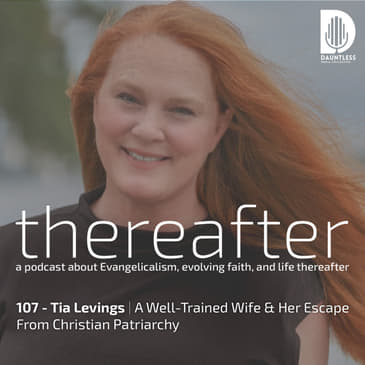


Today's guest on the pod is Tia Levings, a writer, creator, guest expert, and content specialist. She shines light on the abuses of Christian fundamentalism and offers contextual insight into the true horrors of religious trauma. Her memoir, A Well-Trained Wife: My Escape from Christian Patriarchy, releases with St. Martin’s Press on August 6th, 2024.
Her videos on social media have millions of views. Through the lens of her personal experience, she connects entertainment, news headlines, and current events to fundamentalist influences and strategy.
She write about religious trauma and Christian fundamentalism to educate, validate, and empower those who feel smashed by the patriarchy. To create something beautiful from pain. And, because when she went through the hell of church-sanctioned violence, she felt alone and she wasn’t. There are thousands of others out there.
Please make sure to visit her website to find out where to follow her around the web at https://tialevings.com/
And don't forget to pre-order your copy of the book wherever you get your books! You can find all the links for that here: https://static.macmillan.com/static/smp/well-trained-wife-9781250288288/
If you enjoy listening to the show, please consider heading over to Apple podcasts (or wherever you subscribe) to rate and review us. If you really enjoy the show, we would love to see you in our Patreon.com/ThereafterPod! Also, look for us on social media and shoot us a message to say hello, or chat with us in Twitter spaces on Tuesday mornings in deconstruction coffee hour! Twitter: @ThereafterPod, @CortlandCoffey, @ThePursuingLife Instagram: @ThereafterPodcast, @CortlandCoffey, @ThePursuingLife
[00:00:00] This is a Dauntless Media Collective podcast. Visit Dauntless.fm for more content. And we invite you even further into the conversation. Right now, there are some great discussions happening over in The Dauntless Media Collective Discord server.
[00:00:38] If you're interested in chatting with other folks who are deconstructing and decolonizing the oppressive traditions that they came from, please feel free to hop on into the server. If you don't know what Discord is, it's a place where communities can gather online for chatting
[00:00:51] on a wide variety of topics. In our Discord server, we have channels devoted to general deconstruction conversations, meme sharing, therapeutic venting about whatever religious bullshit you're currently dealing with, and even a channel specifically devoted to talking about the latest episodes of The Podcasts You're Listening To Right Now.
[00:01:09] I hope you'll join us. You can log in directly to The Dauntless Server by clicking the link in the show notes, or heading to Dauntless.fm, and clicking the link in the top banner. See you there!
[00:01:27] Welcome to The Daunt after Podcast, a place where we explore life on the other side of faith change. We're here to break down the binaries, deconstruct the dualities and wander through what it looks like to live in the gray.
[00:01:43] In church, we were told that life after leaving would be a better wasteland of unfulfilling hedonism. We've discovered quite the opposite. There's actually a vibrant community of people on the other side of faith, we're finding and co-creating space for hope and healing.
[00:02:01] Come along as we explore the all-too-opt-in uncharted experience of evangelicalism, evolving faith in the life of your after. Alright, here we go. We're back or I should say I'm back, this is Megan, and I'm doing the intro solo today. So it's just going to be a quick intro.
[00:02:36] Portland is out and about and we wanted to get this interview out, so I'm going to just record this real quick. This month has been a little wild. I have been traveling a lot for my day job, believe it or not, my day job is not just
[00:02:52] the podcast so thankfully because while it would be amazing to have a podcast that earned a living, I also have big feeling. Portland and I were just talking about this the other day having big feelings about folks
[00:03:08] that earned their living in the deconstruction space and kind of what that means and a lot of the people that we collaborate with usually have a different job and do this work on the side because it's something that is more of a passion project and not something
[00:03:24] that is the source of reliable income. And it's kind of nice to keep it that way because I think that's what keeps us out of the space of having to just become a content creator, just to create content and things like that.
[00:03:41] So anyway, all that to say I do want to just jump right in to our interview today since I don't have anybody to chat with. So there has been some things going on on the internet but we'll catch that.
[00:03:54] We'll catch that next time thinking about the Olympics and some of the tweets about the opening ceremonies but when I have somebody to discuss with, we'll talk about it then. But anyway, this is an incredible author, T.E. Levins who wrote the book A Well-Chained
[00:04:11] wife that we have an interview with today and I could not wait. You'll hear that excitement in this interview. I could not wait to chat with her. I did read her book.
[00:04:23] I don't always get a chance to read books that I get sent ahead of time but I did get a chance to read and it is incredible. And it's also, as you'll see in the interview, she has a survivor story and I think
[00:04:38] the more we can elevate the stories of survivors and she talks about the importance of this as well. The more we can just do that, raise awareness. It can be a really great activism and advocacy for people that need it the most.
[00:04:54] So all that being said, let's just dive into it. I know you'll enjoy it. So here we go. All right, we're back with our guest. We have T.E. Levins here with us. Welcome, welcome to the show. Hey, thanks for having me. Yeah, we're excited to have you.
[00:05:17] We're really stoked to have this conversation and I know Megan before we hit record. She was already getting into how excited she was. Thank you. I'm glad we're on my cloud. We're getting it recorded for people.
[00:05:30] Just to kind of kick us off for people that might not be familiar. I know I first kind of was introduced to you and a little bit of your story through the shiny happy people documentary.
[00:05:40] But for people that might not be familiar with just kind of your background and the context that you're coming from or may not have seen the promotion for your book, what's kind of the feel that you give people like what's the context that you're coming from and
[00:05:55] kind of what how do you introduce your book and who you are and kind of the context to people? Yeah, a well-trained wife is the story of my escape from Christian patriarchy and it tells the story of how I got into high control religion and escaped from it.
[00:06:10] It was a very visceral physical escape so it's not like an overstatement of the word and it also was not French or weird or some strange mountain cult that no one's ever heard of.
[00:06:22] I grew up in the book opens with a Southern Baptist mega church that was mainstream evangelical. My pastor was the president of the Southern Baptist Convention and this was during the late 80s and the early 90s and as I grew up, the church became more fundamentalist
[00:06:37] and politicized and nationalized as as my character art goes as I grew up. So by the time I was married I was really just a good little Christian girl in ways that most people familiar with evangelicalism will recognize in purity culture, modest culture, obedience culture.
[00:06:57] I understood my one goal in life was to be a Christian wife and mother just something I happened to want for myself so that helped somewhat but then I married someone who is very dogmatic and theologically driven and we ended up in high control fundamentalism
[00:07:15] through Bill Gothard's Institute of Basic Life Principles which is something that readers might be familiar with from shining happy people because that's the focus of that documentary and then a lot of things happened and I escaped in 2007 with my life and my children we
[00:07:30] left everything behind and that gets us to today. Yeah and I know I Corlanola you asked a question I promised but I I was such a good summary, I'm just like a man in the press that you were able to do that so tight.
[00:07:45] I skipped the part where it's coming for our country and that's why I decided to write the book. Yes, and that's part of the important. So many directions but I want to go but I think my first question before we even get to your marriage.
[00:08:00] Like I think about your story and your parents just decided to start going to church you know and there's a lot of us that I think are deconstructing that our parents are like
[00:08:14] I never forced purity culture on you or I never for you know and I think what there's this disconnect where I think our parents don't realize that we owned the religion and then ran with it.
[00:08:27] And so I wanted to ask your thoughts about that because no my parents never handed me a copy of I kissed dating goodbye or my you know but I became you know very
[00:08:39] however you know the way that I developed my own semblance of purity culture was from like lady and lady and a passion of purity and and I kissed dating goodbye that my parents never
[00:08:48] even knew about and so I'm curious like just that that step of like okay then you took it and ran with it and maybe even a new direction that they were even not even aware of perhaps.
[00:09:00] Oh yeah and I think this is important part of my story because while plenty of survivors have stories of really abusive parents that were overbearing mine were just average hardworking folks and I think they get underrepresented within in that time I'm also a gen X child so
[00:09:16] the idea that they would take me to church pretty normal not very not much supervision or like questions asked about what I was being taught pretty normal and so and that's why I wanted
[00:09:28] to show like high control religion came for us as a culture while people assumed they were in good places like there wasn't a lot of question or critical thinking happening and so
[00:09:40] the journey is relatable because at any point people could have just as easily ended up in the extremes that I ended up in or they are tracking with me and know to more than they realized when
[00:09:52] they pick the book up they're like oh my goodness I didn't realize how much of this I would relate to and that's a great way to start. I mean the church was important enough that my parents would
[00:10:02] take me there six days a week and mean that conveyed a certain importance and my pastors were screaming that they could solve they could guarantee a good result if the if only parents would turn
[00:10:14] over their children and one of the things that's coming out and interviews a lot is how family focused evangelicalism was and this is in large part due to James stopson's focus on the family ministries which is so intertwined with all of evangelical culture for them from that as
[00:10:31] that's what's decades and the idea is is that if you can get the kids then you'll get the whole family you'll get multiple generations and we had a very generational church the focus was that you could
[00:10:41] be born there and you could stay there until you die you would meet your partner you would raise your children you would raise eventually your grandchildren there everybody would be there and
[00:10:50] the bitter pill is that the evangelical church changed a lot in those days and those in that same span of time and 50 years old and that church went down from 11 city blocks to one city block and so
[00:11:02] part of them the grief is like what was this all for you took my entire youth and what was this for I mean that's before we even get to some of the extremes that came out of it yeah i i i
[00:11:16] am wondering if it was there for you as you look back on your story was there a conscious narrative in i guess the mind of evangelicalism of like okay we're pivoting from
[00:11:34] maybe reaching you know uh the lost i think about like Jesus people USA and like like this like oh we're gonna like change culture to like we're going to grow in army organically by children
[00:11:49] by way of like that is a great opportunity the church's away that's really wonderful okay so my church again very large very wealthy and we had a missions program i was aware perfectly aware
[00:12:00] that we gave money to missionaries um tiptoe bow is from my same church they were missionaries to the Philippines so we had like you know people coming back on furlough and giving testimonies and
[00:12:10] i was perfectly aware that we had that um but you're right the evangelism was door to door in our communities to spread the gospel within our city claim our city for Jesus our campus 11
[00:12:24] city blocks downtown right next to city hall like we were if we were a giant footprint in the in the little big town the Jacksonville Florida is and we had we're on TV we had licensed plates on
[00:12:35] the cars follow me to first Baptist you know like it was um very much a diminished model while at the same time the bill gothard was rising and i didn't know bill gothards name when i was a young
[00:12:49] child but i could see the footprint because what was happening was our most devout families we're going to these conferences out of state and they were coming back with these um super devout ideas like
[00:13:00] no birth control have as many children as possible only build your home for cash you can't have any debt the woman no career the children home school but do you really need that much education anyway
[00:13:14] and they were respected and revered in our church they were promoted to Sunday school teacher positions they were um they were definitely rising and we looked at them like the kind of people
[00:13:24] we might want to be like but we don't want to be that serious so we'll just support them and we'll still be who we are which was already pretty conservative but but they were like extra special
[00:13:34] and that was the dominionist model like that's that's an idea that spread cellularly through the church i really like that question a lot is it's both were true well and then gradually and and just reading through your story it sounds like you became more and more conservative
[00:13:54] and fundamentalist for your church and i like i even saw you did an Instagram real recently where you kind of listed through we went from this to this fundamentalist to this you know and so
[00:14:07] it it it it gradually do you think that was the prompting uh i guess as i've been reading this i have really been having conversations in rouseling with like is this a product of men
[00:14:19] trying to find the place where they have the most power and the most control or is that a by-product of just people thinking this is the most correct path you know and i like i was just i was
[00:14:31] trying you know i was as a reading your story i just kind of wrestled with that back and forth what are your thoughts there i think it's both i think that like i can definitely point to my husband
[00:14:41] hungering for the right theology and we would try one on and we get really excited about it like new school supplies and then it wouldn't manifest the way that it was promised and so we would
[00:14:51] have to move on to the next thing and it was always getting more narrow and more narrow which is rewarded you know narrow as the way so you you're not surprised that it becomes more strict as you go
[00:15:00] you've been hearing that your whole life but at the same time um when you're looking at a large mega church 10,000 members individual men don't have a lot of power in a field like that and so as we
[00:15:11] had conflicts we would split off and we would go to these other churches again looking for them the most right answer but also more men could be in power in a small congregation so you have
[00:15:22] that element and then when we get to the most intense years of my story where i'm actually in a covenantal dug Wilson called those men don't want to be enthused by anybody else what to do
[00:15:35] they want to be little feasts in their own little kingdoms and so there's not a lot of someone told me to do it because they're the final authority but at the same time underneath all
[00:15:46] of that power structure is this fear like you'll feed me familiar with assurance of your salvation and so nothing ever satisfied like we always had doubts like are we really gonna be raptured
[00:15:58] are we really gonna go are do we know what we do we know for sure that we're saved and so we are constantly drilling down and searching for answers because we never quite had that
[00:16:07] feeling of we've got this figured out now it's working we're definitely Christians we're definitely saved i i i want to ask about that fear because like do you feel like that was for you something
[00:16:21] that was named or conscious in your mind and body through those stages or do you feel like it was like something that was like unnamed or kind of an ambiguous driver where people being honest about like we're afraid we're not right because it feels like they probably not.
[00:16:42] No they are no the group was never saying we're afraid we're not right that was never ever happening what was happening within me was a certain scrupulousity in a paranoia that i must be wrong
[00:16:55] i must just not be doing it right repetitious prayers began i started having something i call raptured drill which was like basically contingency planning in case i got left behind
[00:17:07] terror was i was afraid to say that out loud too i just the only the only way i would have come close to saying it out loud is saying i'm walking the aisle for assurance of my salvation
[00:17:16] that was okay that would be issued in an invitation when they need people to come forward they'd say if you just want to walk the aisle for assurance of your salvation come Jesus now you know and then
[00:17:25] you'd walk up and make the head count they would finally stop singing and you could go home yeah that's thunder in the background i can hear that is thunder i wonder if we would hear it
[00:17:38] yes just now we heard it for the first time it's loud it is like you know it just provided right amount of emphasis from what you're saying about for a bit time ominous i don't know
[00:17:51] if you see the show severance have you seen that show on app on the part of it yeah when you're talking it reminds me of the scenes where they're in kind of their quote unquote punishment
[00:18:00] and they're having to repeat the phrase over and over until they really mean it and there's there's a lot of ambiguity on whether like what that means to really mean it and so they just
[00:18:10] have to go you know and so i was thinking about that but the other the other piece and what i want to ask you about is i think um as i was reading through and you you you have a survivor story
[00:18:23] and you you went through a lot and um and i know that there's a lot of our listeners that that have gone through similar journeys and i think there's two things that i was thinking
[00:18:34] about when i was reading that i think one is that we think those stories are pretty rare and i think that they're more common than we realize and and i would love to hear you speak to
[00:18:44] that a little bit but i think the other thing too is that um i kind of feel like our society is starting to understand trauma a little bit better but kind of more not just not to say there's you know
[00:19:00] more i don't even know like not to say that some people have you know this chybatrama and this is you know this or that but i think that society's starting to understand like generalized trauma
[00:19:11] but i still think society has a long way to go with understanding how to really support people that have complex trauma and so i love for you to speak to that because as then you get
[00:19:21] to the point where you're able to share your story and get the support that you need i i would just love to hear kind of what the most supportive people and you know organizations and things that
[00:19:33] that really came in and really got you through those times so yeah speaking to that um you know that it's more common than we realize and that also just what people can do with um understanding
[00:19:45] complex trauma yeah i think always say that the most helpful statistic you'll ever find is actually listening to survivors so like it's one thing to hear um the top the the ideologies themselves talk about spiritual abuse or outcomes or um controversies if you're listening to the
[00:20:05] people who've actually lived through it then you'll get a better idea of how common it is and the rise of the x-vangelical community the deconstruction hashtags those those are things that didn't exist when i came out um but they've grown and they're and they're tidal waves there
[00:20:22] they're movement they are actually emptying puse and you know those churches can always look to our cultural influences and say that's to blame and that's to blame and that's to blame but that's because they're not contending with the actual survivor stories um there's some really good graphics
[00:20:38] i wish i had them on my hands right now but something like 64% of people report that they did experience some sort of abuse dynamic in their spiritual tradition and that's like that's the majority
[00:20:49] of the spiritual tradition like when you have to look at it that way and say okay this is not a bug this is not unusual this is not isolated to one single denomination or one single church you can't
[00:21:00] just move the leadership around like we need to start looking at it as a movement and that ties in really well with complex trauma because these are people who are raised in these ideologies so
[00:21:11] the trauma is very complex it's incident after incident it's the overall atmosphere that's all encompassing and again complex PTSD and religious trauma weren't words that were available to me when i first escaped so my recovery kind of tracks just like it did in the 80s and 90s where
[00:21:28] my growth tracked with the narrowing of the evangelical movement and the politicization it's hard for to say um of it on the flip side my recovery also arcs along with better resources better vocabulary, verbiage definitions, therapists, certifications all of that stuff has become more
[00:21:49] available the most helpful supports that i found in with cptst i mean i'm a trial of everything i will try every modality it becomes out like i am very dogged about recovery i refuse to give
[00:22:05] the rest of my life over to what would took already the best most vital years you know the my youth my children's childhoods my childhood like i'm not giving this anymore of that this is the
[00:22:16] line in the sand i'm gonna do whatever i have to do so i'll try them and so i have a lot of you know i could pick different ones and give you exact feedback but i think the most has been
[00:22:28] living in a time where i have that kind of resource have the internet available and i'm allowed to talk about it and verbalize it because i think once you speak it out and you get it out of your
[00:22:37] body and out of your system um you no longer have to carry all that inside of you anymore and that alone is a level of freedom that we didn't have when we were behind in behind those doors you know if
[00:22:47] there were silence your your burden is silence and you're supposed to die to self and contain all this pain within yourself you know indifference to someone else's experience um and also like any
[00:22:59] any any support venue that allows me to express how i feel about it without shame like let me be angry let me let me grieve let me be an advocate let me let me follow my calling and and make this
[00:23:13] my life's work like there are as like there's a contingency of people that wish i would just hush because they think it's too stressful for me to talk about it and um actually invigorates me to work
[00:23:24] on behalf of survivors and advocate for truth and tell the secrets out loud i love telling um I love that moment where the power has dissipated because someone said it out loud and you can
[00:23:34] no longer hold it over someone anymore favorite thing in the world um so that is really helpful for you really um so like i'm i'm curious about like the people and systems that like helped
[00:23:52] create an environment for you when you talk about escaping and one of the things that i've noticed in my personal story and in a lot of the stories that i've heard from other people in
[00:24:04] deconstruction is is a trend where sometimes getting out of a high control group and then getting pulled into a high control group uh is way more common than um i think we talk about
[00:24:16] much of the time i left fundamentalists so the impaptist churches that i grew up in and i got pulled into a new monastic hyper controlling church plant organization you know like yeah it was one thing for another right because i was like this is comfortable so i'm
[00:24:31] want to tell me what the right thing to do is um right with a new twist so where where were the people and systems that allowed you to actually escape and develop some new sense of identity
[00:24:45] and maybe kept you from moving into another more comfortable high control group that is a again really great question in that cult hopping which you described is really common and i think one of the reasons why it's so common is because the blame the tendency is to blame
[00:25:02] external sources when you've been dependent on external belief systems as your compass um it makes sense that you would lash out and blame the external source as the problem but the healing
[00:25:13] and the and the prevention prevention of repeating that problem over and over again is inside of you it's because we have a broken self-development we have a broken inner compass and a dependency
[00:25:24] on our own intuition and so we haven't learned to organize ourselves internally so that we aren't looking for external solutions to the chaos fundamentalism thrives in times of chaos because they offer really clear concise solutions to problems that are seen very overwhelming that give you a
[00:25:43] clean formula to follow a series of steps and they sell with promises they don't really show you the outcome or the evidence with the fruit of this but they're showing you what can be if only
[00:25:52] you do this process right and fundamentalism can be in anything so called hopping from a religious group to an exercise group or wellness program or another political ideology is common because they haven't done the work inside of themselves that makes them less dependent on this external authorities to
[00:26:10] answer their questions so for me what that meant was um and this is true of my physical escape where I had to get to the point where I quit waiting on an external savior to come rescue me
[00:26:22] to how I've used that in recovery over and over again I am not waiting for an external source to be my guru to be my solution to give me the answer or not pretty promise I want to sit and I've grown
[00:26:35] my tolerance to be able to sit in the discomfort of not knowing and so to answer your question of what's helped it's things that allow that space to exist so there was a time where I had
[00:26:45] to stop going to church because going to church all of the time was giving me a prescriptive answer over and over again and it gave me no space to hear myself think and it wasn't a scandal that made me
[00:26:55] stop going to church it was that I needed a window of time in my week where I listened to myself so I stayed home on Sunday so I could listen to myself and meditate and sit on the ground and
[00:27:05] read poetry and um it was spiritual practice but it wasn't like a prescriptive solutions oriented spiritual practice and I just looked at it as a temporary way to hear myself think what happened when I heard myself think was that I wasn't dependent on those external systems anymore
[00:27:22] and I was able to articulate some things that I didn't realize at the time were really just regulating to my nervous system for example um the cross that this point in my journey
[00:27:33] at this point in my what I'm talking about it was orthodox and um imagery is a very big deal in orthodox parishes you have a lot of iconography and crosses and symbolism and um it turns out
[00:27:44] that I get really upset and disregulated when I'm surrounded by torture symbols I can't do it so I didn't know that till I stopped going around it and I had a feeling to contrast that with
[00:27:55] and go like oh it's actually not healthy for me to constantly ruminate on the way Jesus died I would do better if I just think about the way he lived and modeled my life after his life
[00:28:06] instead of constantly focusing on the inch or torture of device of a romance you know ancient romance that that's how they like to kill people not healthy that's all that is so good thank you
[00:28:19] so much for sharing all of that well and I think about I mean you say I needed time to listen to myself I think for a lot of folks that start that kind of deconstruction journey just that is very hard
[00:28:33] because it's like for so long we've been conditioned that our own inherent thoughts are not okay I don't it was there it was or anything that kind of helped you validate your own self or your own sense of
[00:28:46] oh it is okay to have feelings desires wants critical thought you know like what what are some things that um and you mentioned therapy a lot I you know EMDR therapy I do EMDR therapy I love that I will
[00:29:02] preach that all day long to but anyway is there anything else yeah and that ties back into that fear piece that you talked about about like being able to acknowledge that fear too I think I'd love to hear
[00:29:12] you circle back to that also yeah I started really small and I'm one of the reasons why I don't like hammer therapy is because I kind of assume at this point people know it's there if one
[00:29:22] was if we don't want to assume there's some really big under um there if we want to right therapy there there was great um if you have licensed therapy and skilled coaching and therapy group that is
[00:29:38] under some sort of supervision and accountability then I would say yes and trauma is trauma so if you can't specifically find a religious trauma therapist you can get a lot of benefit from a trauma therapist um itself but that said listening to yourself I think you're exactly right
[00:29:59] being aware of like I don't know what I want for dinner so let's start there like that's a lot more approachable than what do I think about matters of eternity so since I'm not ready to go to that
[00:30:13] great big place and the squirm that you feel when you're in like a lot of people have a hard time meditating because they can't handle that quiet chamber with their own thoughts it's very terrifying to
[00:30:23] them that is it's step by all by itself like why are you feeling so afraid what are you afraid it's gonna happen if you listen to your own words in your own head or here's one really tricky
[00:30:34] you'll get a hot thoughts but there's someone else's voice and then you have to go through this process of well who's saying that I do I really believe that it's all it's a whole um onion to unpack
[00:30:45] and you know go through but I started with little things like um what do I want to do today what do I want to eat for dinner what clothes do I like to wear you know I had to I had to really
[00:30:55] just kind of start with stuff that had no eternal significance at all just to exercise the muscle a little bit yeah I I think I've said on the the show before and it's like bringing me back to this like
[00:31:10] I don't know in a very real way right here as I'm sitting here but like saying the words like what do you want I remember that being so like scandalous to you to think you know like because it was
[00:31:24] like so opposite of this like selfless you know heavenly minded way that we were supposed to did that I thought I was supposed to be so I remember asking myself that question of like what do
[00:31:38] I want and the like simultaneous like joy and terror that that question brought about in a been a Broadway so I really love how you talk about like making it smaller or bite-sized.
[00:31:52] I love that you use the word selfless there because um one of the biggest things I had to can tend with when I came out of this was that I had no sense of self at all. I had died to self
[00:32:01] so effectively I had no self worth self identity self development self autonomy and so I had completely bought into this idea that selfless to a fault which is to self annihilation
[00:32:14] which is not the same thing as being in actualized human being who is making a choice to serve another if you're actually working your way into not existing that isn't helpful for anything or anybody
[00:32:28] and that's kind of how I had to frame it at first like oh I'm a lot more use this is still a consumer model but I had to start with I'm a lot more useful if I'm healthy and I was a mom so
[00:32:39] I understood you know like I need to be the best mom that I can be I need to be a healthy whole person if I'm gonna take care of these kids. So it was little things like allowing myself to have food
[00:32:50] enough sleep enough enough gentle baby care and just kind of redeveloping a selfhood and I started that process fully intending to continue to to be selfless in my service but I would do it as a healthier person. Now what happens when you become a healthy self person
[00:33:08] is that you start to discover boundaries and psychological health and you want more of that and it's part of becoming a mature adult and then now you can see how we should co-exist in a society
[00:33:19] where we're all strong we're not consuming one another no one's dying in order to take care of me or serve my cause yeah it's an interesting delineation that forms.
[00:33:31] Yeah and one thing that I've been thinking about as we've been kind of in this spot is that when you are in fundamentalist environments I feel like there are things that happen when you step outside
[00:33:46] that that kind of confirm the narrative that they tell you about what's going to happen so for example I know you talk about like a sexual experience I was very negative and that was
[00:33:56] I think there's a lot of us that are grown up and are not given a lot of education about consent and what that looks like and so then we have these sexual experiences and it's like
[00:34:07] we're like oh they told us that it would be awful and now we go out into the world and it's awful and it's because we send you know and instead of like because they set us up in a really poor way
[00:34:20] without education right now and I think and you also speak to like you know you had communities that were not necessarily from within your church that supported you and then when you know
[00:34:30] things would go wrong in your life you'd be like oh it's because I'm too much in the world or you know and I think that they kind of set it up so we can build this narrative that's conflicting with
[00:34:40] oh this oh this is what they said what happened I mean is that kind of like what you're what you saw along the way and I'm curious too like because I do want to get into your
[00:34:52] online communities too but if you have anything you want to say about that I don't know if you wanted to talk to that piece before we jump into that I don't know I just think that's a very
[00:35:00] big theme in the book is discovering how much of it's a setup and how much like where to describe the blame I internalized the blame almost across the board for most of my life without
[00:35:12] actually looking how cause and effect works like for example they didn't teach us to recognize abuse so of course I would internalize everything that happened to me as sin because I didn't know any other information there was no other way of looking at it there were practices that
[00:35:30] they were teaching were abusive authoritarian models frequently result in abuse to the people who have a power imbalance and the people who are on the bottom but that wasn't something that we talked
[00:35:39] about or prepared each other for you know so yeah I mean part of the awakening was realizing it's a setup it's a con the whole its projection and a lot of itself fulfilling prophecies that
[00:35:50] they create yeah well and and I think about even the title right well behaved right behavior and like behavior as something you mentioned earlier in the interview like you know if you trust
[00:36:03] us with your kids you know it'll turn out right or if you give us your life it'll it's like kind of that behaviors that result that they point to that they go look these kids are very
[00:36:14] you know quiet because of blanket training or whatever right it's like right but it's like what are they measuring you know they're measuring something and passing it off as success when there's so much more to it yeah you know what I would have loved back when they were
[00:36:32] passing out to train up a child I would have loved to talk to an adult who grew up in it and decided against it and I would have loved to know well why did you decide against it your
[00:36:41] dad's Michael Pearl or like I would have loved to know like when we were learning purity culture I would have loved to actually hear from the pregnant teenagers they kicked out a church because
[00:36:52] they were pregnant like what was your experience like I would have loved some evidence you know and it was available it was just shunned and pushed away so that it wasn't accessible to us and that's what
[00:37:01] I'm here to change the survivor stories are where all of the information is yeah yeah and I want to get into politics too but I I've been coming into that I do want to because you started
[00:37:16] I mean Coral and I have found so much depth and richness in the online community that we have through the podcast and and we see that especially now with like you mentioned the Deconstruction
[00:37:28] hashtag x-fange article people are founding the finding each other you started finding people in different ways like as soon as the internet came out it really it sounds like and I'm curious just to hear
[00:37:39] for our listeners to hear that kind of journey the progression of like how that started how that community became a lifeline for you because eventually it developed it it turned into income
[00:37:49] for you and then you know how that's evolved into your online presence now and how you kind of approach social media now yeah that's a great question and it's a good parallel in all of this goes so
[00:38:02] I'm finding people to connect with online I'm an OG I with soon as the internet was available I learned chat rooms and forums and there's a subplot in the book with some women that really
[00:38:14] helped me learn how to educate myself and break free and it's one of my favorite lines sort you know plot lines in the book so I won't spoil it but um I am like that's my orientation
[00:38:26] is that if I need to learn something I will go look it up and I will go find people who are actually doing it and I will find more successful people and learn from them and sometimes it gets me in trouble
[00:38:36] like with my gothard funding mentors I did the same thing it was tightest two leadership you know let the older women teach the younger women but then other times it's just good positive role models
[00:38:45] and I've learned more critical thinking so that I can wait out the good influences from the bad but social media and recovery were they timed well together this was 2007 2008 I actually joined Facebook
[00:39:00] as soon as it became public and I was still in my marriage at that time I remember right where I was in my little closet office and I enjoyed Facebook and so I started looking up some of the other
[00:39:11] people I'd gone to church with growing up and seeing how you know results like how to this turn out for them where is everyone now as soon as Instagram was as an app I joined it I love creativity
[00:39:23] and photography and all of that so you know I was just learning these tools is intuitive to me and I will always talk about the thing that I'm learning like that's what I do and so as soon as hashtags were around
[00:39:35] I started I don't remember where necessarily it started maybe with the watchberg I mean the Warpburg watch website which is a survivors community forum because I was familiar with forum behavior probably had searched that I had a big blog at the end of my story
[00:39:55] very well-trafficked website and so I was connected to commenters fellow commenters Lenin Doyle had started mom and mom a staring back then the pioneer woman was starting like we were all just like little blog roll buddies back then and nobody knew how it was all gonna turn out
[00:40:15] and I just finding X van Gellicles which was probably when Blake started posting I remember I think it was a humor post and I got to laugh at it which I love now being able to laugh some
[00:40:32] of the trauma out it doesn't have to be like we're crying it out all the time and so jokes about the common experience I was like oh there's a community of people here who've been through this
[00:40:41] and of course they hadn't been through what I'd been through but at the same time I was starting to write my story I started writing it as a journal exercise in therapy in 2012 and by 2015 I knew it was
[00:40:53] gonna be a book I thought it was gonna be a novel at first but I started writing a book about it and and as soon as I did that I started realizing what whatever I was doing on social media
[00:41:03] was gonna eventually be book platform and so I really like formed some boundaries about what I talk about online and what I don't and I knew that I wanted my social footprint to be about
[00:41:14] religious trauma recovery and I just quickly made friends and supported other people's voices and amplified survivors and continued to do my work till 2021 and I used to stutter so I was pretty
[00:41:30] sure I would never talk about this I would always stay behind the page but Josh Dougher's trial hit and I couldn't keep it inside anymore it just kind of exploded out of me in that timed again
[00:41:41] lucky timing with Reels coming to the scene and so I started making Reels about Josh Dougher and I was already really networked in with with deconstruction accounts and so it just latched I mean
[00:41:53] the a fundy snark community on Reddit got my stuff and they they blasted it it was that that was a huge surge and then Amazon's producers found me and we did Chinese happy people and then that
[00:42:07] was another big growth and that allowed me to sell my book so then when I knew I had a traditional my dream come true a traditional contract for my book and the work became more like adverse
[00:42:20] advocacy driven and it wasn't just like about the book anymore because we've been by now through the Trump presidency and I realized that the very patriarchy that I had run from was actually coming
[00:42:32] for us like in a real way and row when row happened I knew like this is not where it ends and no one realizes that like no one's talking about how extreme this really goes and it gave me
[00:42:44] all the courage I need to really say the hard things in the book I knew I was going to name names I knew I was going to tell about all the practices that people in my DMs were saying
[00:42:53] me too but no one was really talking about so I went for it and I guess I'm going to continue to go for it because the work is setting people free yeah and I think that that's a great segue
[00:43:09] into what you mentioned earlier in terms of like how it's coming to take over. Like you know you you you mentioned that there weren't great ways to hear survivor stories I heard so many testimonies
[00:43:23] of people who left Islam and came to Christianity people who left Mormonism and came to the Baptist Church it got really real saved whatever you know I heard a lot of those stories
[00:43:34] I didn't even know there were stories of people who left Christianity like if you would have asked 16 15 16 year old me I like I wouldn't I would be like that doesn't happen nobody like because you are
[00:43:46] right like this is the early 2000s like obviously you know we talked to like Shannon Currence on the podcast and he's like yeah like back you know way before I was even a glimmer he was you know questioning these things
[00:43:58] but before the internet we didn't have that so now we've asked forward and there's this huge political movement that feels really to me really terrifying it feels and it feels like a backlash I so many the people I grew up with that were funny like I was
[00:44:22] are no longer Christian they're they're ex-engellico they're loosely Christian or whatever and many of the people I grew up with that were culturally Christian but not that serious are homeschooling their kids and campaigning for Trump what what is that
[00:44:42] that's very perceptive of you for some all because it is a flip of the dynamic and I think it goes to the it points to the successful sales pitch of fundamentalism I would like just putting myself in those
[00:44:58] same shoes with the people I went to high school they didn't buy in when I was proselytizing to them but I'm sure they were clocking like oh here's a solution here's a solution and they were just
[00:45:11] doing their life and then when the chaos hit their homes and their lives now they're it makes sense to them they're gonna they're gonna go back to this system that they heard which makes me
[00:45:20] feel really itky and complicit for the seeds that I planted for evangelicals as some because as I you know definitely evangelized and proclaimed that I had the right way and I've discarded that in my
[00:45:33] life only to see them take it you know and keep going with it but yeah I think fundamentalism is doing the same thing that it's always doing which is painting with a very one-dimensional promise
[00:45:44] and a result a shiny result it has an endless supply of missionaries like with the Treadwife movements a great example of where they're showing you a very beautiful idealized stripped of any reality version of what traditional lot rolls look like just today a big piece on
[00:46:03] ballerina farm hit and that's a Mormon Treadwife influencer with like eight or nine kids and she's she's like the duggers she's just prettier like it's the exact same thing and that's attractive to people who are scared so when the economy is tight or we have political unrest
[00:46:24] or worldwide unrest and it just feels out of control this gives them something they can do it is extremely gratifying to bake a loaf bread bake a loaf of bread did I say that right
[00:46:35] I love yes I said it right I just made it even over bread that's all yeah get yes I know to grind your wheat berries you have a sense of agency because you can do something
[00:46:46] you know wash your cloth diapers feed your goat take your chickens thumb out to the man I'm you know I'm living in an alternative it's satisfying when you feel like you don't have any
[00:46:58] power controlling your life anywhere so I get it the script hasn't changed the only thing that could be different now is that there's survivor stories to share whereas 20 years ago that was not true
[00:47:11] 10 years ago that was not true now there is so we do have a hope that wasn't there before yeah and well and I think the other thing that's happening is it's this weird shift from
[00:47:24] what used to be like the friendly evangelicalism all call it like like at face value of of course we know what's underneath so like what's happening like JD van saying you know let's
[00:47:38] let's make a new law that you can cast votes for your children but of course you know and they're I mean they're coming after women's rights to vote and like all it like there it's like
[00:47:47] let's not just have Christian ideals or morals let's actually go back to the early 1900s or even 1950s or even 1960s and let's bring back the racism let's bring back the you know
[00:48:01] misogyny and all of the in and it's like they're not just pretending anymore they're taking their masks often showing what they really want and there's people that are buying into it and so I'm
[00:48:13] curious you're thought of like the difference between the kind of let's just have Christian values to like let's be a Christian nation and the most extreme version of that I think they're at a point in
[00:48:24] their strategy where they feel confident doing that because they think they've gained enough ground so it's important to look at timeline here the heritage foundation is the predominant organization behind project 2025 it was founded in 1973 in response to integration they do not
[00:48:41] believe that the populist should vote they are openly condemning democracy because it dilutes their power they don't want integration so they want to go back to segregation they want to go to a
[00:48:55] model where only men vote women don't have the vote and they put that into place in 1973 operating through all of the Republican presidency's until in the today it is hate driven because that's
[00:49:08] it's rude you know but they're very smart strategic and patient with it meanwhile the rest of us are doing more of like a Billy Graham model of Christianity where we're loving our neighbor
[00:49:18] and we're singing DC talk and we're kind of getting through culture with a foot in each world and it's live laugh love and a lot of people didn't see the hate the hate will underpinning coming
[00:49:30] but Trump gave everyone permission to be hateful so I think it dovetailed together pretty nicely the thing that I say all the times if you want to know how the patriarchy is going to run the
[00:49:41] country look at how patriarchy's run their home because they practice that governance on the family scale and then you can just widen it all the way up to the government and you can see exactly so in
[00:49:50] patriarchal homes women don't vote or if they do they vote the way there has been wants them to there's modesty purity women are treated as property it's authoritative model poverty is is rife
[00:50:02] um dedications low I mean then it lacked all of it like that's what it looks like in those homes that's what it's going to look like in our culture which is point for point project 2025
[00:50:12] yeah yeah and I mean I think to your to your point of like we just didn't see it but it was under there you know I mean there's looking back down there's so much of that that I see
[00:50:26] underneath the live laf love right that like was very militaristic I mean it's what some of it wasn't even like subtle like like brought those like like running these campaigns the acquire the fire campaigns was like literally like militant style calls to like you know in list in
[00:50:49] the war for your culture right I mean that that's that early 2000 Christianity that I grew up in late 90s early 2000s like it was all war languages got battle cry was wrong pieces whole thing
[00:51:01] you know like so there was there's you know not even subtle in some places militaristic dominance dominions type of conversation and it's wild to see it get so much less subtle now then I'm on
[00:51:17] this side of it and I'm like I thought this was gonna diminish and it it feels like it's these are not fringe the overtime window is like just like you know we're having these conversations
[00:51:29] about should women vote like I never thought they're talking about taking away divorce rights I would be dead I needed divorce and then specifically needed no fault divorce because when you're in an
[00:51:40] abusive dynamic you don't have what it takes to prove that you've been abused by people who already are predisposed not to give you a divorce and I would be dead and my children would be dead and
[00:51:53] that's terrifying to me women's rights you know they made it they made it seem like it was this one narrow thing about abortion but another example of that same health care is kind of woman
[00:52:03] had get a his direct to me with daughter husband's permission no she cannot no she has to have him sign off so it's there's a the far reaching complications it's authoritarian authoritarian theocracy is
[00:52:18] terrifying whether you're that's your home you know whether that's your country we have no place to go you have no advocates a big part of my story is when I turned to my church for help in my church
[00:52:28] point in me back home and this was after I had been completely honest with them about everything that was happening in my home and that terrifies me for women I when you take away mandatory
[00:52:38] reporters and outside resources and you shut down the ability for people to have access to freedom it's terrifying because they don't not everyone's the same you know it's so privileged to sit in
[00:52:49] their little white congregations and say well this is how it should be for everybody but everyone's life is not like that and their life isn't like that in truth you know like they're lying too but
[00:53:01] I know your audience knows this I'm preaching to the choir it's just it's disheartening it's terrifying I think it's really it's like one of the things when I was tweeting about your
[00:53:09] book I said this is a really a book to see and also be seen and I think because you can find yourself in it but then I also think that it does help help other people understand because I'm divorced
[00:53:22] and I got divorced two years ago and I had a lot of resources we both had full-time jobs I was able to immediately move out and have a separation of physical separation and I have friends
[00:53:33] that don't have jobs that have been a stay at home mom that are trying to navigate okay what do I do and what does it look like to have to stay in my home after I want to leave and think you know
[00:53:43] there's a lot of different everybody has their own story but I think elevating those voices and helping to understand that there's a for me I see that there was a lot of privilege in the
[00:53:55] specific way that I got divorced and and I had finances to hire a mediator and a lawyer if I needed to you know and so I think about what that how that's different and I will just say because you
[00:54:07] mentioned no divorce that's something that every time I tweet about that even progressives push back on that it is so bizarre how how much people don't understand that the possibility of having to
[00:54:21] prove a justified reason to actually leave a partnership how damaging that can be versus being able to freely leave jet like without that specific reason I don't know if you have anything more
[00:54:33] you want to say about that but I just that caught me because people push back on that from both sides and I just yeah unbelievable to me there's been so much rhetoric around it being some sort of convenience
[00:54:43] thing like somebody I think van said like women who changed the partners the way they changed it underwear and it's this this is a casual I go through men thing which really discounts how often
[00:54:54] that that is the only way you're gonna get away from somebody who you're not gonna embarrass him publicly you're just gonna get free and you're gonna let him say face and you're just gonna give
[00:55:02] him a new default divorce and you're gonna get away in my case my divorce was determined like I don't know eight nine months after I left but my custody took another 10 years and
[00:55:13] I would have been married that whole time or like it's like forced back I would have been killed so and it's hard for me not to I know that I'm speaking from my own experience but I also know
[00:55:23] my own experience parallels so many other survivors of abuse that they just can't there most of us don't have any money there's no like I was gifted I was granted an angel who paid for most of my
[00:55:35] investigations but that was not that's on typical you know and so to be able to pay for those kind of resources and fight those battles in court the advocacy groups are heartbreaking and the way
[00:55:45] that it choose women up and it's like that's just I hear people spout that shit off and I'm like you just have no idea what you're talking about and you have people's lives in your hands
[00:55:56] and having it on the books isn't actually harming anything it's a deflection of what is actually harming divorce does not ruin families abuse ruins families so you take away our right to divorce you're not doing anything about the abuse if anything you're making it worse yeah and
[00:56:11] to your point about they're being something a next stop right it's like you make it about abortion but then it's like oh access to birth control ability to get a history act to me ability to
[00:56:23] you know track women's cycles from you know the the government or the public you know these laws in Texas of like bounty essentially for turning in somebody for getting an abortion or going out
[00:56:40] of state to get an abortion it is the same thing happens with divorce it's like oh it's about divorce but then I can imagine a world where you know it's like okay no fault divorce and now
[00:56:51] it's like we're gonna criminalize people if you like live together without being married or what you know it's like they will just continue to move that step another wrong because it's not
[00:57:00] about the thing it's about the control right exactly well and I just want to add because this we're talking about within fundamentalism but I also was talking to somebody recently about the prevalence of domestic violence within police and you know kind of people just people in power
[00:57:19] but especially police officers and I I just want to add that in because at that point then you continue to have not an ability to turn to help just like with your church and you were sent
[00:57:30] right back to your home I do think that they're also I have seen that happen with within you know calling for authorities and then just kind of being dismissed for that yeah yeah well
[00:57:43] that we I feel like we've like really descended into a into a positive way to end the podcast but I do think that there is an important piece around we kind of started with hope and how you know
[00:57:55] can we be you know a resource for people and other people going through this how have you built community maybe we can turn back towards out a little bit before the end so that we don't leave
[00:58:07] people with just like it's going to shit guys yeah yeah we'll bring you home yeah what brings me help is activism it means connecting with other people I had a feeling Biden was gonna step down
[00:58:22] on a year ago and so I really I gives me a lot of hope to see that that came true and that we have all this galvanization around a female candidate and that the young people have realized that yeah
[00:58:34] actually they're they're vote actually matters um which is me hope is recovery and be and feeling whole again and coming you know coming back to a sense of wholeness and being able to
[00:58:47] have power to know I tell on them um right that is on ability that I have and that is an impact that I can kind of do with my experience and I encourage other survivors to find their sense of power
[00:59:01] it might be very individual and small you know but that is so much um you know in a person's life and you have no idea where it's gonna go it kind of flips evangelicals as a monotodied you know go ahead
[00:59:12] each one reach one let's let's each survive reach another survivor it gives me hope that people are reading the book and that they're having so many positive experiences from it because this was an
[00:59:22] active bravery to do and it's been very healing for me personally but to see it have impact in someone else's life is was my goal my like my one goal I tell people like I wrote this book
[00:59:34] for the woman in target who needs to put it in the grocery cart and hide it with the milk because she doesn't get to go to a bookstore and buy it you know and um a lot of things had to for that
[00:59:43] to be true a lot of things had to happen I had to write a book that was big enough to sell that way and to get into target and and it had to be published a certain way and all of these things had
[00:59:52] to be true and they've all happened um target hasn't yet said they're putting it in stores it's definitely online but I'm like I needed in stores so that she can find it um and so having goals
[01:00:05] like that to manifest is is hopeful to me I think we are all capable of more change than we give ourselves credit for and the the tiniest prick of light in the darkness makes a big difference so
[01:00:18] I encourage us all the user voice yeah that's beautiful I want to give you a chance to plug where people can find you but I also I'm gonna ask you and I'm putting you on the spot but you
[01:00:29] we were talking about memoir and on threads and you you said that you there's something you always say about memoirs like I do you remember without what yeah absolutely if if you're holding a someone's memoir if you're holding someone's traumatic memoir you are holding a testament of victory
[01:00:45] they got through it they survived well enough to tell the story and to see it make it into this product that you can hold in your hands so you know from the get go that you're holding a happy ending
[01:00:55] and I'm really urge readers to hold on to that at parts of the story are harrowing but you stand in solidarity with me when you read and you it's a happy ending I mean look at her she's
[01:01:05] I'm pointing over my shoulder for those of you who can't see but um it's a gorgeous book and I'm so proud of it and then so thankful that people are reading it yeah where can people find you in your
[01:01:15] book and corolling go ahead this is well this is where I will plug and listen to that pre-order the book this is we should get this episode right out just right before the release of the book
[01:01:24] and we can be a part of that getting it in target right getting it in yours being a part of like being able to make this accessible pre-order numbers are a huge deal for that in a world where yes
[01:01:36] you can order it on prime and it'll come the next day and you know you don't have to pre-order it to necessarily make sure you get it day one that's not what it's about it's about making sure
[01:01:45] you're supporting this and showing the publishers and the buyers that there's market support for this so pre-order the fuck exactly yeah you're in this matter so much it's like if you want to like
[01:01:57] support me by buying the book yeah that's great and I appreciate it but if you want to go nuclear on your support for the book I'm free-order it so good no no no no as your question Megan
[01:02:08] of t-elevings.com is my website you can buy the book anywhere you buy books in hardcover digital or audio I did read the audio myself people always ask that did you read it I did and I'm
[01:02:20] t-elevings writer on all the socials alright well thanks for coming on and I will just say that I um I get a weekly message from my library that tells me all the New York Times best sellers and I'm
[01:02:32] gonna be looking for it on that on that email. I think it's crust yes all right thank you so much thank you. You're welcome. All right that's a wrap go pre-order t-elevings book I know we said that in
[01:02:53] the interview I'm gonna say it again you can follow her on all the socials you can follow courtland coffee on all the places you can follow me Megan at the pursuing life Instagram Twitter all the
[01:03:06] places the podcast at thereafter pod or thereafter podcast whether you're an Instagram or Twitter and come join her discord also just a little sneak preview I think we've said it before but we are starting to do some of that preliminary planning for our 2025 content morning event that's gonna
[01:03:27] be in Atlanta so bookmark president's day weekend if you haven't already and that's I think it's February 16th and 17th and so put that on your calendar save the date all right we'll see you next time