
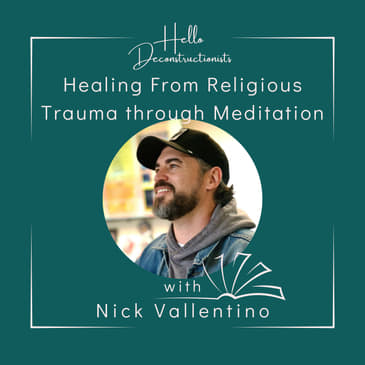

Nick Vallentino (he/him) has experienced 30 years of religious trauma and abuse and has since figured out how to be happy and take his own life back. Now he's helping you do the same as a religious trauma coach and by sharing his own story on the podcast today.
In this episode we talk about:
- Religious trauma and anxiety
- Church leaders perpetuating harm
- Cognitive dissonance
- Meditation
- Encouragement for Enneagram 3s!
Connect with Nick
- Instagram: https://www.instagram.com/nickvallentino/
Connect with Maggie:
- Instagram: https://www.instagram.com/hello_deconstructionists/
- Email: hello.decons@gmail.com
- Discord Server: https://discord.gg/C3DUZdF3HJ
- Visit dauntless.fm for more content
Learn more about Amy's music:
- Website: https://www.amyazzara.com/
- Foray Music: https://www.foraymusic.com/
- Instagram: https://www.instagram.com/amyazzara/
This is a Dauntless Media Collective Podcast. Visit dauntless.fm for more content.
[00:00:01] [SPEAKER_02]: This is a Dauntless Media Collective podcast. Visit Dauntless.fm for more content.
[00:00:08] [SPEAKER_01]: You know, I think one of the things I still struggle with is that I should be a certain
[00:00:14] [SPEAKER_01]: way. You know, whether that's the Bible in church and childhood trauma, all the things,
[00:00:24] [SPEAKER_01]: all the people that have told you your whole life, there's something wrong with you,
[00:00:27] [SPEAKER_01]: you're too much, you're not enough. That is really hard. I mean, it's almost like you,
[00:00:35] [SPEAKER_01]: I don't want to say you have no control over changing that because I do think you can rewire
[00:00:38] [SPEAKER_01]: your brain. I do, you know, I've been trying to do that for the last eight years of my life,
[00:00:43] [SPEAKER_01]: meditating almost daily. You know, I have spiritual practices, especially the last five years,
[00:00:49] [SPEAKER_01]: like I just went all in on this, you know, on healing myself. So I still have those thoughts.
[00:00:54] [SPEAKER_01]: Now, they aren't emotionally charged. You know, they don't trigger me. They don't scare me. But
[00:01:04] [SPEAKER_04]: they're still there. Hello Deconstructionists, this is Maggie, the host of our podcast,
[00:01:41] [SPEAKER_02]: where we'll collectively share our stories and experiences of leaving high control religion,
[00:01:45] [SPEAKER_02]: along with what it's been like for us to find new practices that help us feel good and confident in
[00:01:50] [SPEAKER_02]: ourselves. I hope that hearing these stories reminds you that your deconstruction is valid,
[00:01:55] [SPEAKER_02]: and most of all that you are not alone on this journey. You are good, you are loved,
[00:02:00] [SPEAKER_02]: and you are worthy just as you are. Hello Deconstructionists.
[00:02:07] [SPEAKER_02]: My guest today is Nick Valentino, who uses he him pronouns. Nick has experienced 30 years
[00:02:12] [SPEAKER_02]: of religious trauma and abuse, and has since figured out how to be happy and take his own life
[00:02:16] [SPEAKER_02]: back. Now he's helping you do the same as a religious trauma coach, and by sharing his own story on
[00:02:22] [SPEAKER_02]: the podcast today. So welcome Nick. Thank you so much for being here. Oh, I'm so happy to be here.
[00:02:27] [SPEAKER_01]: Thanks for having me. Yeah. Is this your first podcast? No, I think I've done four now. Oh,
[00:02:33] [SPEAKER_02]: you're not a podcast newbie. That's like a, this is like a pro. Is it really? I just started
[00:02:39] [SPEAKER_01]: like last month. Yeah, it's so new to me. Okay, I started doing this in December. All of this had
[00:02:44] [SPEAKER_02]: no plans to do any of this. Yeah. Yeah. So what are you doing? We'll go out of order. I gave you
[00:02:50] [SPEAKER_02]: an order and then we're going to mix it up. So yeah, what are you, what are you doing now?
[00:02:55] [SPEAKER_01]: Yeah, you know, I hate putting labels on it, but it's kind of like a coach. I just want to
[00:02:59] [SPEAKER_01]: help people that have religious trauma help them heal, figure out how to frickin be happy,
[00:03:04] [SPEAKER_01]: you know, it almost destroyed me. I was, you know, in a really bad place when I started
[00:03:10] [SPEAKER_01]: deconstructing, I left the church and so yeah, just out here trying to help people by sharing
[00:03:13] [SPEAKER_01]: my story, but also like through coaching, accountability, encouragement, whatever you
[00:03:18] [SPEAKER_01]: need, you know, whatever you're struggling with on the journey, like I want to be there
[00:03:21] [SPEAKER_01]: to support you, help you heal and be happy. Yeah. All right. So tell us a little bit about
[00:03:27] [SPEAKER_02]: your church experience and how you grew up and sure all things church related. Yeah.
[00:03:35] [SPEAKER_01]: My mom and dad got saved when I was five and, you know, I remember almost immediately something
[00:03:42] [SPEAKER_01]: changed in the house, you know, we couldn't watch Batman. We couldn't watch cartoons anymore.
[00:03:46] [SPEAKER_01]: We couldn't watch TV too much, you know, and mom and dad seemed to not be fighting as much
[00:03:51] [SPEAKER_01]: and pretty much from there within the next three, four years, my dad became a pastor
[00:03:56] [SPEAKER_01]: and then a few years later started a church and then a few years later became a missionary and
[00:04:01] [SPEAKER_01]: started planting churches all over the place. And so my whole upbringing was in church. I lived
[00:04:06] [SPEAKER_01]: for church, you know, we were there pretty much every day, every night to the place when I, when
[00:04:12] [SPEAKER_01]: I turned 18, my dad hired me and, you know, I became a youth pastor and a janitor and all
[00:04:17] [SPEAKER_01]: the things. And so yeah, grew up in the church and then yeah, started working for my dad and,
[00:04:23] [SPEAKER_01]: you know, eventually left working with my dad and started working with other churches and
[00:04:27] [SPEAKER_01]: did that for another 16, 17 years, you know, as a pastor in different churches. Even started
[00:04:32] [SPEAKER_01]: my own church at one point. I had a church in Phoenix, Arizona for a few years. So yeah,
[00:04:38] [SPEAKER_01]: it's been my whole life until my mid 30s. Do you remember a time before church? Like when,
[00:04:44] [SPEAKER_02]: like you were five when they got saved, do you remember what was different about
[00:04:48] [SPEAKER_02]: pre and post saved parents? Yeah, I just remember the only, you know,
[00:04:53] [SPEAKER_01]: and even this, you know, you don't even know how much of it you know, it was actually real. But
[00:04:57] [SPEAKER_01]: you know, I seem to remember because I was so young that they just weren't fighting as much
[00:05:03] [SPEAKER_01]: because my parents, my parents when they got saved, they were cokeheads, partyers, just extreme.
[00:05:11] [SPEAKER_01]: My dad had been in jail, in and out of jail. And you know, they were just wild, you know,
[00:05:17] [SPEAKER_01]: no education, didn't have parents around much and had me when they were 16, you know, so young.
[00:05:25] [SPEAKER_02]: They were 16, so young. So yeah, I feel like this is, you can correct me if I'm if I'm wrong
[00:05:32] [SPEAKER_02]: about this for your own experience. But I feel like that kind of story is like what church
[00:05:39] [SPEAKER_02]: can do, right? It's like, okay, so these people are, I don't know,
[00:05:43] [SPEAKER_02]: cokeheads or whatever, like they're trying to, like maybe they are living in a way that's like
[00:05:47] [SPEAKER_02]: destructive to their own body. And this helped them find some like sense of stability.
[00:05:53] [SPEAKER_02]: Do you feel like looking back, this is a healthier version of your parents than they would have
[00:05:58] [SPEAKER_01]: been if they hadn't found the church? Gosh, it's impossible for me to know that only
[00:06:02] [SPEAKER_01]: because you know, it happened when I was so young. So young. But you know, I think that's a deeply
[00:06:09] [SPEAKER_01]: philosophical question that I would love to ponder. I've never really considered that.
[00:06:15] [SPEAKER_01]: Because when I consider this off the top of my head, I've never considered this, but off the
[00:06:19] [SPEAKER_01]: top of my head, let's say you're a drug addict, you're in and out of jail, you're
[00:06:23] [SPEAKER_01]: hurting people for sure. And you're hurting the ones you love. You're in the church,
[00:06:27] [SPEAKER_01]: have a larger platform hurting lots of people all the time. So God, it's tough. You know,
[00:06:35] [SPEAKER_01]: it's really tough for me. But I want to say the church is worse.
[00:06:38] [SPEAKER_01]: Yeah. You know, I don't know.
[00:06:42] [SPEAKER_02]: Well, I've thought about this from my own experience and my own like looking at the
[00:06:47] [SPEAKER_02]: adults in the church that I grew up in. I always say my church loved like a
[00:06:51] [SPEAKER_02]: man redemption story, like a guy who was like addicted to something fill in the blank and then
[00:06:57] [SPEAKER_02]: he found Jesus and he's turned away from his sin. And that was like the ideal,
[00:07:01] [SPEAKER_02]: the ideal Christian story. And when I think about the idea of Jesus, he died for your sins,
[00:07:08] [SPEAKER_02]: whatever, if you feel like you're a sinner and like you're a bad person, that story is freeing
[00:07:13] [SPEAKER_02]: in a way because you're like, Oh, I am bad. Like I view myself as bad. Yeah. Not that you are,
[00:07:19] [SPEAKER_02]: but that's how you view yourself. And so to find a way where your sins are forgiven
[00:07:24] [SPEAKER_02]: is freeing. When you're just born into this and the default is like you're a sinner just for existing,
[00:07:31] [SPEAKER_02]: that's a really damaging story. But depending on what you're coming into it with,
[00:07:36] [SPEAKER_02]: you know, you're going to take that story a different way. But it seems like your parents
[00:07:40] [SPEAKER_02]: were maybe the kind of people for whom that story actually kind of works or could be comforting,
[00:07:46] [SPEAKER_01]: even if they still do damage, it could be absolutely because you come in,
[00:07:49] [SPEAKER_01]: it's under this guise of love. It's always initially love, acceptance, forgiveness,
[00:07:56] [SPEAKER_01]: all the great things we love about Christianity. And I believe it's love bombing at its finest.
[00:08:02] [SPEAKER_01]: You experience that with the church and a community of people for a season of time.
[00:08:06] [SPEAKER_01]: It's euphoric. And then things start to shift and you start to see there's a lot more judgment
[00:08:12] [SPEAKER_01]: than you thought there would be in there and you know, all these things. And so now,
[00:08:16] [SPEAKER_01]: but you're stuck. Now, you know, this is an abuser, but you already have fallen in love with them
[00:08:20] [SPEAKER_01]: because they love bombing. And now you're anxiously waiting. Are they going to love me
[00:08:23] [SPEAKER_01]: today? Not love me today, you know, and it creates such internal chaos and you're,
[00:08:27] [SPEAKER_02]: it's an addiction. It's like a trauma bond. Yeah. Okay. So what are some of the beliefs that
[00:08:33] [SPEAKER_02]: you internalized or like, what are some of the things that coming out of church? You're
[00:08:37] [SPEAKER_02]: like, Oh my God, that was damaging. Oh, that's that's several times. I mean,
[00:08:42] [SPEAKER_01]: are you kidding me? Wow. Oh my God, there's so many things. There's so many things. Yeah,
[00:08:48] [SPEAKER_01]: top of my, you know, off top of my head. Let's think
[00:08:51] [SPEAKER_01]: so damaging, you know, look, you know, I'll speak about things that
[00:08:55] [SPEAKER_01]: I never would have imagined could happen, you know, and that I've never heard anyone talk
[00:09:01] [SPEAKER_01]: about, you know, things were really hard for me is that I was a love bomber. So coming
[00:09:10] [SPEAKER_01]: out of a healthy relationship, period friendships, intimate relationships. I saw
[00:09:16] [SPEAKER_01]: like the effects of purity culture, like really deep in me, you know, to the point where
[00:09:22] [SPEAKER_01]: like I couldn't perform sexually for years outside of the church, like it was like so deeply in
[00:09:29] [SPEAKER_01]: my head. The girl wasn't a Christian and all of these things that, you know, still to this
[00:09:34] [SPEAKER_01]: day, it blows my mind because my heart is in it, you know, but, but my body, it's so crazy how deep
[00:09:41] [SPEAKER_01]: some of the stuff I discovered was that I didn't even know right was there. So yeah,
[00:09:46] [SPEAKER_01]: what else? I mean, those are just off time I had things that I've been heaven, heaven.
[00:09:50] [SPEAKER_01]: I think heaven completely detached me from reality, attached me from reality. And
[00:09:58] [SPEAKER_01]: I think I lived a life in a bubble and as a result when I left the church now I'm in
[00:10:02] [SPEAKER_01]: the real world and nothing makes sense. And everything feels really hard and overwhelming
[00:10:08] [SPEAKER_01]: and confusing. Yeah, I mean, I could go on on anxiety. I live with anxiety for, you know,
[00:10:13] [SPEAKER_01]: four or five years, like debilitating anxiety, panic attacks. And I was told to pray,
[00:10:18] [SPEAKER_01]: you know, and so messages like that your whole life just being told to pray when
[00:10:23] [SPEAKER_01]: you're hurting or somebody's hurting you, you don't know how to take care of yourself
[00:10:28] [SPEAKER_01]: ever because that's always been suppressed. And so as an adult year, I was in my 30s and I don't
[00:10:33] [SPEAKER_01]: know how to take care of me. I don't even know what that means. When somebody would say, you
[00:10:37] [SPEAKER_01]: know, listen to your body, be like, what the hell are you talking about? What I had no concept
[00:10:42] [SPEAKER_01]: of what that because it never mattered, you know, all that stuff. So yeah, I mean, just so
[00:10:47] [SPEAKER_01]: many things that are so damaging starting at a young age, you know, I guess another way to
[00:10:53] [SPEAKER_02]: think about this question is maybe like, because yeah, sometimes like, okay, that's really
[00:10:57] [SPEAKER_02]: overwhelming to be like, what are all the bad things about church? Because we could go on forever.
[00:11:01] [SPEAKER_02]: What are some reasons that you feel like this, like when I asked about whether church or the life
[00:11:07] [SPEAKER_02]: your parents were living before church, which one was more damaging and you said church for sure.
[00:11:12] [SPEAKER_02]: What makes you say that? Like, what about it is like, that's worse, you're causing harm to people.
[00:11:18] [SPEAKER_01]: Oh, man, again, I you know, I feel unprepared to answer this question. I'll just give it a shot and
[00:11:25] [SPEAKER_01]: be willing to say I messed up if I make a mistake here. But
[00:11:29] [SPEAKER_01]: that's what we're all doing. Yeah, because it's off the top of my head, right? And I've never
[00:11:33] [SPEAKER_01]: considered it. But when I think of the scope of the damage within my own family, and then
[00:11:41] [SPEAKER_01]: that's now been multiplied across how many churches and how many thousands of people,
[00:11:46] [SPEAKER_01]: you know, I don't know. I haven't investigated all of this or anything of that nature, right? But
[00:11:52] [SPEAKER_01]: the more I have looked into things and again, I was behind, you know, behind the curtain my whole
[00:11:59] [SPEAKER_01]: life in church. So I saw the in and outs of so many different denominations and thousands of
[00:12:05] [SPEAKER_01]: pastors, you know, I worked at a mega church for 10 years, one of the biggest ones in the
[00:12:08] [SPEAKER_01]: country. So I mean, I just saw so many things. And it the amount of damage I've seen and not
[00:12:17] [SPEAKER_01]: just you know, we're talking people, how many people I have met with since coming out of the
[00:12:22] [SPEAKER_01]: church, I can't I can't go anywhere. If I mentioned that I am in the religious trauma world, I
[00:12:28] [SPEAKER_01]: just say those words, it's going to be an hour conversation. Like there's so much hurt
[00:12:34] [SPEAKER_01]: that is happening in churches and messages that are so damaging. Whereas, you know, look,
[00:12:40] [SPEAKER_01]: you're a drug addict, you get your girl pregnant at 16. But you know, my dad had a business, it's
[00:12:45] [SPEAKER_01]: not like he was a bum, you know, he was a hardworking man, they were just addicted to drugs and loved
[00:12:50] [SPEAKER_01]: to party. Like, you know, like, is that I mean, it might be a sinful life, but you're not really
[00:12:58] [SPEAKER_01]: hurting, you know, like, I mean, it's pretty normal life. As long as you're not, I don't think
[00:13:02] [SPEAKER_01]: my dad was ever like beating my mom or anything like that, you know, they'd have big fights and
[00:13:07] [SPEAKER_01]: stuff. But I never saw him hit her. So yeah, I mean, to me, they were kind of pretty normal,
[00:13:11] [SPEAKER_01]: maybe just with like a little bit of a drug problem. But then you become a pastor and plant
[00:13:16] [SPEAKER_01]: churches all over the world and things and the extent of the damage that I've seen witnessed
[00:13:20] [SPEAKER_01]: just it's hard for me to imagine this is better. No, no. But for them, it's better
[00:13:26] [SPEAKER_02]: maybe, you know. Yeah, but you're right. Like the scope of influence maybe that you have as a pastor
[00:13:35] [SPEAKER_02]: or like as somebody in church, any kind of church leadership, I mean, you're reaching so many
[00:13:40] [SPEAKER_02]: people even in like a small church, like I grew up in a really small, small town, small church.
[00:13:45] [SPEAKER_02]: It's like every summer I worked at a summer camp and I was, you know, preaching these
[00:13:50] [SPEAKER_02]: terrible ideas to kids and how many kids went through camp in my time there. And it's like,
[00:13:56] [SPEAKER_02]: we just, I mean, our goal is to preach the gospel. Sure. It's damaging. Right. It's wild. Yeah.
[00:14:04] [SPEAKER_01]: It's wild to think about. My dad right now he has two churches. Okay. So, you know,
[00:14:08] [SPEAKER_01]: every week for the past 20 years, he's been in, you know, building churches and preaching
[00:14:15] [SPEAKER_01]: these messages. And I just thought, you know, one of my dad's big things is discipleship.
[00:14:20] [SPEAKER_01]: So not only, you know, he he's in this position in place of power that young men come to my dad
[00:14:27] [SPEAKER_01]: to be trained how to be like this. You know, so it's like exponential what I've, you know,
[00:14:33] [SPEAKER_01]: how many pastors my dad's raised up and how many, you know, that's what they're all about.
[00:14:37] [SPEAKER_01]: Go plan another church, go play, get another guy in here, let's train him up, send him
[00:14:40] [SPEAKER_02]: out, you know, make some more money. The church is literally a fucking pyramid scheme. It's like,
[00:14:47] [SPEAKER_02]: if you bring two people to church, you, you know, your inheritance will be whatever I don't know.
[00:14:53] [SPEAKER_01]: It's like so wild. Yeah. Right. We are what do you, you don't actually get it's the
[00:14:59] [SPEAKER_01]: shittiest pyramid scheme of all because like you give your life to it and you get no
[00:15:03] [SPEAKER_01]: you don't make a ton of money, you know, but you're laying up treasures in heaven.
[00:15:07] [SPEAKER_02]: Yeah. No, it's an MLM run by men. Oh my God. Most MLMs are like women centered, you know,
[00:15:16] [SPEAKER_02]: the church is a man's MLM.
[00:15:19] [SPEAKER_00]: It's the men's virgin. Oh, you're right. It really is.
[00:15:24] [SPEAKER_02]: That's maybe I've never considered that. This is your Lula Roe, you know?
[00:15:30] [SPEAKER_00]: I just watched that documentary. I was pretty interested. Yeah. I had no idea what that
[00:15:34] [SPEAKER_02]: was, but I watched that MLM stuff is like it's always felt so churchy to me and maybe that's
[00:15:39] [SPEAKER_02]: why. Like it always felt so like it feels like a cult documentary to me, which are weirdly comforting,
[00:15:45] [SPEAKER_02]: you know? But maybe that's why there's like a pretty strong connection.
[00:15:49] [SPEAKER_01]: Yeah. I mean, I watched those. It's like watching what is it shiny happy people.
[00:15:53] [SPEAKER_01]: Oh, it's pretty similar. Yeah.
[00:16:00] [SPEAKER_05]: Have you seen the Amazon Prime docuseries shiny happy people?
[00:16:05] [SPEAKER_05]: Were you shocked to hear the wholesome American Duggar family was involved in a cult?
[00:16:12] [SPEAKER_04]: A cult full of abuse, sex and religious trauma.
[00:16:16] [SPEAKER_04]: A cult that claimed to educate children and plan to use them to take over the world.
[00:16:21] [SPEAKER_04]: Have you wished you could sit down with an IBLP survivor and hear more of the story?
[00:16:27] [SPEAKER_05]: Join hosts Jessica Goforth and Alexis Gray on Leaving the Village,
[00:16:32] [SPEAKER_05]: a podcast by IBLP survivors centering their lived experiences and shining a light on all the
[00:16:39] [SPEAKER_05]: hidden torment and harm they endured growing up in the cult shown on the groundbreaking docuseries.
[00:16:47] [SPEAKER_04]: We have exclusive interviews with cast members where we laugh and cry
[00:16:51] [SPEAKER_04]: and go behind the scenes with them as we discuss our shared experiences.
[00:16:56] [SPEAKER_05]: If watching the documentary left you wanting more,
[00:16:59] [SPEAKER_05]: check out Leaving the Village on Spotify, Apple Podcasts or on your favorite podcast platform.
[00:17:08] [SPEAKER_05]: Subscribe to this podcast by visiting Dauntless.fm.
[00:17:12] [SPEAKER_02]: Okay. Can you tell me about your time in church leadership? Because you went right from like
[00:17:17] [SPEAKER_02]: being a kid to being a youth pastor it sounds like. Yeah. With zero qualifications, by the way.
[00:17:24] [SPEAKER_02]: God doesn't... Okay. What's the phrase? God doesn't call the qualified. He qualifies the
[00:17:29] [SPEAKER_01]: called. There it is. Yeah. It's so funny. I remember that one. Yeah. So I got thrown in the youth ministry.
[00:17:35] [SPEAKER_01]: I wouldn't say I got thrown in, I got wanted it. I was really excited about it but
[00:17:39] [SPEAKER_01]: shouldn't have been given that kind of a position. But it was for my dad's church. So
[00:17:43] [SPEAKER_01]: it's not... I can't take too much credit for it. You know, but I was doing everything
[00:17:48] [SPEAKER_01]: so excited about God just so happy in life completely into that bubble. You know,
[00:17:55] [SPEAKER_01]: fully dedicated. So I grew up in the church in my teen years. I went a little wayward.
[00:18:01] [SPEAKER_01]: I smoked cigarettes sometimes and every now and then would curse and had a secret girlfriend.
[00:18:06] [SPEAKER_01]: But was still like a really good kid, you know? But I'd get in trouble all the time for
[00:18:10] [SPEAKER_01]: it's just stupid things because I wasn't allowed to date till I was 18. Like ridiculous rules
[00:18:15] [SPEAKER_01]: that I broke but... And so then at 17, my dad basically kicked me out of the house. I got
[00:18:21] [SPEAKER_01]: my GED and they threatened to kick me out of the house, sent me to Bible college or I had no
[00:18:26] [SPEAKER_01]: word to go. So I went to Bible college. Yeah. And so in Bible college that's kind of when I had my
[00:18:33] [SPEAKER_01]: real like one year of partying. Like I was by myself in Southern California Bible college
[00:18:38] [SPEAKER_01]: and everyone parties at Bible college, you know? So I get kicked out of Bible college. My first...
[00:18:43] [SPEAKER_02]: Your Bible college was way cooler than mine. I went to Christian college and I did not do
[00:18:48] [SPEAKER_02]: any partying. So I should have gone to yours. Well, I probably just hung with the wrong crowd,
[00:18:53] [SPEAKER_01]: you know? It's probably not everyone party, just my friends. But so yeah, I get kicked out and that
[00:19:00] [SPEAKER_01]: you know is so shameful at that. I was just so embarrassed and that was kind of like when
[00:19:04] [SPEAKER_01]: God finally got a hold of my life, you know? And my dad had just moved to Puerto Rico.
[00:19:09] [SPEAKER_01]: We were from New York. My dad just moved to Puerto Rico to start church. And so he,
[00:19:13] [SPEAKER_01]: you know, I went out when I got kicked out of Bible college. Just like come back son.
[00:19:16] [SPEAKER_01]: And so basically from day one, I helped my dad build this church in Puerto Rico
[00:19:21] [SPEAKER_01]: and did that for like six years. So yeah, he hires me as his youth pastor. I'm so excited.
[00:19:27] [SPEAKER_01]: I'm fired for the Lord and did so many really cool things. I ended up becoming the college
[00:19:31] [SPEAKER_01]: pastor. As I got a little older as the worship leader, we recorded albums, we did concerts.
[00:19:36] [SPEAKER_01]: We had a cool cafe thing where we did concerts on Friday nights and I loved it.
[00:19:41] [SPEAKER_01]: Like I was just serving the Lord, you know, up until I was like 23. I loved serving with my dad
[00:19:47] [SPEAKER_01]: until I met this girl and wanted to move back to the States. But then yeah, from there, I went
[00:19:52] [SPEAKER_01]: to ultimately because I met a girl and moved back to the States.
[00:19:57] [SPEAKER_02]: That's why they tell you not to date. Yeah, it's seriously right. Yeah.
[00:20:01] [SPEAKER_01]: He had cheap labor. That's why, you know, so yeah, I went to New Mexico because that's where
[00:20:06] [SPEAKER_01]: by this point, I was going to marry this woman and worked at a church there,
[00:20:11] [SPEAKER_01]: the mega church for 10 years and then kind of floated around for a little while.
[00:20:14] [SPEAKER_01]: I went to like Phoenix started a church, worked at a couple other churches.
[00:20:19] [SPEAKER_01]: And then yeah, I left the church. That's the bird's eye version of it, you know,
[00:20:25] [SPEAKER_02]: after all that, it's a lot. Was the mega church that you were at initially in like New York City,
[00:20:30] [SPEAKER_01]: New York? No, no, it's part of Calvary Chapel. So it's one of the biggest Calvary
[00:20:36] [SPEAKER_01]: Chapels, but it actually at the time I think was like the eighth biggest church in America.
[00:20:41] [SPEAKER_01]: It's huge. The church is ridiculous. It's insane, you know.
[00:20:44] [SPEAKER_02]: Wow. Okay, then tell us about your deconstruction. What's the quick and then I left church.
[00:20:54] [SPEAKER_01]: Yeah, so okay, my deconstruction man, it's hard for me to, to I've tried to write this out so I
[00:21:01] [SPEAKER_01]: could be more articulate, you know, trying to condense, you know, because mine really happened
[00:21:06] [SPEAKER_01]: over so long of a period of time deconstructing, especially getting to the point where I no
[00:21:12] [SPEAKER_01]: longer like I saw Christianity as a weapon of evil, you know, to get to that point took
[00:21:18] [SPEAKER_01]: me so many years. But I would say it all started just when I started studying the Bible for myself.
[00:21:25] [SPEAKER_01]: So one of the cool things about Calvary Chapel is that they're, you know, really adamant about
[00:21:29] [SPEAKER_01]: studying the Bible yourself. So I did that, you know, I remember as a 12 year old kid
[00:21:33] [SPEAKER_01]: getting a Strong's Concordance. I don't remember that book. It's this really big book where you
[00:21:38] [SPEAKER_01]: like look up words, you know, and I was so excited and my first leather Bible, you know,
[00:21:42] [SPEAKER_01]: and I was so excited. Like I loved the Bible. So I got to start studying the Bible.
[00:21:46] [SPEAKER_01]: And I don't remember exactly what happened, but probably like Bible college going to
[00:21:51] [SPEAKER_01]: Puerto Rico, you know, on fire for the Lord, I started just going deeper and deeper and
[00:21:55] [SPEAKER_01]: deeper and study. And I remember just really being confused as I started preaching as a youth
[00:22:02] [SPEAKER_01]: pastor studying the Bible in depth. Because as I studied, there was no consensus on what all of
[00:22:10] [SPEAKER_01]: this stuff meant. And there hasn't been for thousands of years. But the way I had always
[00:22:17] [SPEAKER_01]: been taught it was and the way I was hearing it preached week after week, it was as if
[00:22:22] [SPEAKER_01]: this is God's word when I'm telling you this means. And that became really uncomfortable.
[00:22:29] [SPEAKER_01]: And I would say that was the first time that I can look back and say cognitive dissonance
[00:22:34] [SPEAKER_01]: kicked in hard there. Because it was really hard for me intellectually to wrap my mind around
[00:22:40] [SPEAKER_01]: that. Then I went to seminary, I studied Greek, I studied Hebrew, and I started reading the Bible
[00:22:46] [SPEAKER_01]: in a dead language and realizing nobody I mean, I'm talking some of the more brilliant people
[00:22:51] [SPEAKER_01]: on the earth who have dedicated their lives to Scott like studying this book. And they know
[00:22:57] [SPEAKER_01]: way more than any pastor I've ever talked to. And they're like, I don't believe in God,
[00:23:01] [SPEAKER_01]: because there's like, you know, they've deconstructed because as you read,
[00:23:05] [SPEAKER_01]: I'm not saying that all of them have but I would dare say a majority of them have
[00:23:11] [SPEAKER_01]: deconstructed as they've gone in and really pulled apart the Bible, at least to the point
[00:23:16] [SPEAKER_01]: where it's really impossible to say like this is an inspired by God book without just saying
[00:23:21] [SPEAKER_01]: that by faith despite clear evidence to the opposite. So yeah, I would say that's where
[00:23:28] [SPEAKER_01]: it all started just for years and years on preaching the Bible preaching the Bible
[00:23:31] [SPEAKER_01]: studying the Bible and more and more I realize. And then I would hear, you know, like some of the
[00:23:36] [SPEAKER_01]: preachers I really admired and pastors and the way that they would talk about verses and how
[00:23:40] [SPEAKER_01]: manipulative it sounded and how they're kind of twisting things or how they're they're omitting
[00:23:46] [SPEAKER_01]: these other perspectives on this text, you know, and how harmful all of that is. So I would
[00:23:51] [SPEAKER_01]: say that was just intellectually it became harder for me and harder to sit in church.
[00:23:56] [SPEAKER_01]: I wish I had a really great story that like it all just deconstructed but I don't you know.
[00:24:02] [SPEAKER_01]: And then the other thing was just like, I couldn't stand pastors. I just felt like they were terrible
[00:24:08] [SPEAKER_01]: people. You know, that was just my personal experience. Like, it took me a really long time
[00:24:13] [SPEAKER_01]: to just admit that because the longest time I made excuses for why they treat people the
[00:24:18] [SPEAKER_01]: way they do and why this abuse and I didn't even think of it as abuse. It just, I
[00:24:23] [SPEAKER_01]: didn't like it. I didn't like being around them. I just felt fake, always gossiping since a kid.
[00:24:28] [SPEAKER_01]: I can remember my mom and dad every Sunday after church in the car, gossiping about who was there,
[00:24:34] [SPEAKER_01]: what they're doing with their lives wrong, who wasn't there like every single Sunday, you know,
[00:24:40] [SPEAKER_01]: and every time we're at church. So yeah, just seeing all of that just the way the behind
[00:24:44] [SPEAKER_01]: the scenes the way people were talked about the way volunteers were I mean, I can't tell you
[00:24:49] [SPEAKER_01]: how many volunteers I've seen have their hearts crushed by a church leader, you know,
[00:24:54] [SPEAKER_01]: for just the most ridiculous things. So yeah, all of that stuff it just starts piling up,
[00:24:58] [SPEAKER_01]: piling up, you know, I can tell you the last straw though, the last straw, you know, the last day
[00:25:04] [SPEAKER_01]: I was like, I will never because I left the church over 10 years ago. I went back for about a
[00:25:09] [SPEAKER_01]: year and a half. I got convinced that there was hope for the church, you know, and I want to
[00:25:15] [SPEAKER_02]: know first what made you go back. Okay, that's a pretty yeah, it's crazy. Yeah, I love the story.
[00:25:21] [SPEAKER_01]: So I leave the church, I'm miserable for a year and a half suicidal. I moved to LA. I'm just
[00:25:27] [SPEAKER_01]: smoking pot all day every day drinking. I'm just trying not to lose my mind. I felt like
[00:25:33] [SPEAKER_01]: I was going crazy. Didn't know it at the time, but I had severe PTSD. So I finally get myself
[00:25:38] [SPEAKER_01]: to therapy kind of at the, you know, um, yeah, I was I was really scared. I was gonna just
[00:25:43] [SPEAKER_01]: kill myself. I went through a divorce while leaving the church, losing my career, all the things,
[00:25:48] [SPEAKER_01]: finally get to therapy, start feeling better after about six months of going every single week. I had
[00:25:55] [SPEAKER_01]: to go every week. I mean, I was so desperate, start feeling better. And yeah, after I start
[00:26:01] [SPEAKER_01]: feeling better, I'm just living my life. I've built a business that I'm really happy about.
[00:26:05] [SPEAKER_01]: I'm not like rich or anything, but I'm able to pay all my bills. You know, it's such a big
[00:26:08] [SPEAKER_01]: thing for me coming out of the church, not having gone to, you know, traditional college and not
[00:26:13] [SPEAKER_01]: having any backup plan at all. You know? And so, you know, I started a business. It was going okay.
[00:26:19] [SPEAKER_01]: Living in Southern California and I'm happy, but I still would consider myself
[00:26:26] [SPEAKER_01]: a quasi Christian at this point. I just don't really go to church much. You know what I
[00:26:32] [SPEAKER_01]: mean? I'm just disconnected from it all. And I just look at the church kind of like now,
[00:26:36] [SPEAKER_01]: you know, I'm just bruised. I'm just so hurt. I've been so beat up. I'm so confused as to why
[00:26:42] [SPEAKER_01]: I'm feeling so anxious all the time, why I don't like being around these people,
[00:26:46] [SPEAKER_01]: why I'm seeing so much hurt in the church, you know, why things aren't lining up for me logically.
[00:26:53] [SPEAKER_01]: I'm still just confused about it all. But I'm feeling better. And I meet this guy in Southern
[00:26:57] [SPEAKER_01]: California in San Diego actually, he's a surfer guy and he it turns out he's a pastor and he
[00:27:03] [SPEAKER_01]: pastors this little church on the beach at one of my favorite surf spots. And so we get to kind of
[00:27:08] [SPEAKER_01]: know each other, we're talking and turn a fight, you know, come find out he needs a worship leader.
[00:27:13] [SPEAKER_01]: And in this I had never met a dude like this. Like he cursed. I'd never met a pastor. He's just
[00:27:17] [SPEAKER_01]: he was just like a normal human being, you know, he we had a beer after a surf.
[00:27:21] [SPEAKER_01]: And I just remember thinking like this is so crazy, like sit down with a pastor and have
[00:27:24] [SPEAKER_01]: a beer in public, you know? And I'm a surfer. I love the beach and I'm just like this
[00:27:31] [SPEAKER_01]: is my dream life right here. Like can I maybe maybe I just have been even though I've been to
[00:27:36] [SPEAKER_01]: so many churches and I've been so exposed to the Christian church, like maybe there is this one
[00:27:41] [SPEAKER_01]: church that I can make this work, right? And so I'm there for about a year and a half total
[00:27:47] [SPEAKER_01]: the first year that pastor that hired me my friend Joe who's still one of my dearest friends,
[00:27:53] [SPEAKER_01]: he gets sick. He starts struggling with depression. He's always struggled with
[00:27:56] [SPEAKER_01]: depression but it got really bad. He had been the pastor for 24 years. This was the last
[00:28:00] [SPEAKER_01]: the last straw for me. He had been pastor for 24 years, never taken a sabbatical. So he's really
[00:28:06] [SPEAKER_01]: struggling with depression. His marriage is struggling and he asks for a break. They give him a month
[00:28:10] [SPEAKER_01]: off at the end of the month. He still feels like he needs some more time. You know, he's like,
[00:28:15] [SPEAKER_01]: look, it took 24 years the first time I'm probably going to be another 24 years. Just
[00:28:20] [SPEAKER_01]: give me another month. I just want to make sure I'm ready for this. You know, want to
[00:28:23] [SPEAKER_01]: make sure my marriage is good. He's in counseling. He's looking at his medic medication dose.
[00:28:27] [SPEAKER_01]: It's not like he's just doing nothing, you know. So he asked for an extension. They give it to him.
[00:28:34] [SPEAKER_01]: But during that extension that month, it was there was three pastors at the church, him,
[00:28:38] [SPEAKER_01]: myself and another associate pastor. And I watched this other associate pastor gossip about him
[00:28:46] [SPEAKER_01]: every single day and basically got him kicked out long story short, gets him fired
[00:28:53] [SPEAKER_01]: and took over the church. And yeah, it was infuriating, like infuriating. And I just felt so
[00:29:03] [SPEAKER_01]: lost, so confused because here's Joe, the pastor that brought me on the thing that gave me hope.
[00:29:07] [SPEAKER_01]: He's sick. Now he just got kicked out of the church. And so within so that wasn't it wasn't
[00:29:12] [SPEAKER_01]: just that okay, it wasn't just that happen like I should have just let right then been like,
[00:29:16] [SPEAKER_01]: but you know, I'm working at a church a block from one of my favorite service spots,
[00:29:21] [SPEAKER_01]: making good money. Like, you know, I'm trying to be wise here. Do I give this up even though
[00:29:25] [SPEAKER_01]: I had just seen this guy malign Joe, you know, and like, do I want to work for this guy? No way
[00:29:31] [SPEAKER_01]: I would ever want to work for this guy, that kind of thing. But within about two weeks,
[00:29:36] [SPEAKER_01]: he tells me, Hey man, we're gonna have to let you go just completely out of nowhere,
[00:29:41] [SPEAKER_01]: you know, for no reason. And it was just like devastating, which I get it. He's the new
[00:29:47] [SPEAKER_01]: guy and he wants to bring in somebody else. That's fine. That's his right, you know,
[00:29:50] [SPEAKER_01]: cool. But with that said, the behind the scenes is my wife at the time, she had just gotten a
[00:29:57] [SPEAKER_01]: really major car accident and had been she had temporary brain damage, she had been in and out
[00:30:02] [SPEAKER_01]: of the hospital. And we needed health insurance, right? And so they knew all of this. So you
[00:30:07] [SPEAKER_01]: know, they offered to extend my life insurance for three months, instead of two weeks or it
[00:30:12] [SPEAKER_01]: was like the end of the month, it was just going to expire, you know, when I have kids,
[00:30:15] [SPEAKER_01]: like it was just traumatic, you know, and I had done a great job there. I've been faithful. So
[00:30:19] [SPEAKER_01]: and then so they said they would keep me on for three months. And then they said they'd give
[00:30:22] [SPEAKER_01]: me a severance. Long story short, my last day of service, you know, they get up there. Oh,
[00:30:28] [SPEAKER_01]: we love Nick. We're so glad that you're able to be here for this season. And, you know,
[00:30:31] [SPEAKER_01]: we're sad to see you go all this BS stuff, right? And as I'm leaving, you know, I still
[00:30:37] [SPEAKER_01]: hadn't received my checks. And so I asked them was like, Hey, I still haven't received
[00:30:41] [SPEAKER_01]: my severance check. And so a guy, one of the guys goes upstairs, he's like a deacon and he
[00:30:46] [SPEAKER_01]: comes back down and say, Oh, here's your check. I don't open it in there. I should have. But I
[00:30:51] [SPEAKER_01]: wait, I get in the car, I open the check. And it was like a fourth of what they had promised me,
[00:30:56] [SPEAKER_01]: you know, just no, no notification. And I had it in writing, like what they were going to, yeah.
[00:31:03] [SPEAKER_01]: And it was just all so, you know, I just couldn't, I just was like,
[00:31:08] [SPEAKER_01]: just tell me you're not going to pay me. Like why I just don't get, I'm done. I will never
[00:31:13] [SPEAKER_02]: go. So I know that was the last day I went to church last day. Wow. Wow. Oh my God. Okay. Well,
[00:31:20] [SPEAKER_02]: wait a quick follow up. Was your wife okay? After all of that? I mean, define okay. You know,
[00:31:27] [SPEAKER_01]: it's like she'll she'll never be the same. But yeah, she's fully functioning, but she
[00:31:31] [SPEAKER_01]: still gets vertigo. We're not married anymore. But we talk regularly, she still has vertigo
[00:31:37] [SPEAKER_01]: and she still struggles. And she feels like there's more that she still hasn't found yet. And it's
[00:31:43] [SPEAKER_01]: been, you know, four or five years that she's still going to the doctor, still trying to make sure
[00:31:47] [SPEAKER_01]: she's figured out everything all the ways because she got, she was sitting at a red light in a drunk
[00:31:52] [SPEAKER_01]: driver hit her going 45 miles an hour. She was a dead stop. Yeah, he didn't even see it.
[00:31:58] [SPEAKER_01]: Yeah, he was belligerent drunk. And just yeah, so she got, she was really bad. Wow. And
[00:32:05] [SPEAKER_02]: this is just like such a good example of how the church says that they take care of each other and
[00:32:11] [SPEAKER_02]: they're so loving. And you know, we see all kinds of examples of how this doesn't actually play out
[00:32:17] [SPEAKER_02]: that way. But this is an example of like not even taking care of their own, you know, like there
[00:32:23] [SPEAKER_02]: are people in the church that are hurting, whether it's, you know, depression, and you're like
[00:32:29] [SPEAKER_02]: needing time off to take care of yourself or a car accident. And you're not even like, oh,
[00:32:35] [SPEAKER_02]: they should keep you on because your wife got in a car accident. Fine, you have to let people go,
[00:32:39] [SPEAKER_02]: you have to let people go. But like, to then just like lie about how much they're going to
[00:32:43] [SPEAKER_02]: give you and like just knowing that it's setting you up for not necessarily failure,
[00:32:49] [SPEAKER_02]: but like setting you up for something that's like really hard when they don't have to do that.
[00:32:55] [SPEAKER_01]: They could just be honest about it. In their pastors, all of the people in the world,
[00:33:03] [SPEAKER_01]: right, that should be able to do these kinds of things, do the right thing, they should be able
[00:33:08] [SPEAKER_01]: to. And it just at some point cognitive dissonance reduction isn't good enough,
[00:33:15] [SPEAKER_01]: no matter how much you resist and try to make sense. It just so how it ultimately manifested
[00:33:22] [SPEAKER_01]: for me was in extreme anxiety. All of that cognitive distance, while all of this, you know,
[00:33:28] [SPEAKER_01]: deconstructions happening, I'm still clinging on, I'm going back to church, I'm still trying to
[00:33:32] [SPEAKER_01]: believe still holding on. Eventually it was all those things I just shared coupled with
[00:33:37] [SPEAKER_01]: debilitating anxiety, my internal I felt sick all the time physically, constantly.
[00:33:43] [SPEAKER_01]: And I just got you get sick of all of that you just gets why am I doing this? Even if I'm
[00:33:47] [SPEAKER_01]: going to go to hell, it's almost like, you know, I don't know, is it better to have hell here and
[00:33:52] [SPEAKER_01]: heaven later if there is one or try to have heaven here and maybe I end up in the hell. But
[00:33:58] [SPEAKER_02]: I don't know. Yeah, I had such hell trauma and like fear of hell. And so it was hard to
[00:34:05] [SPEAKER_02]: let go of the idea of God because that ultimately meant like you could be going to hell,
[00:34:12] [SPEAKER_02]: right? But at some point, that even felt better than staying where I was because it felt so awful.
[00:34:21] [SPEAKER_01]: And like that is very telling. Yeah, exactly. Right. Exactly. When was this one of this all
[00:34:27] [SPEAKER_02]: happened for you? So I left, let's see, I graduated college in 2013. And by the end of
[00:34:34] [SPEAKER_02]: college, like looking back through through my journals, like I've been trying to look
[00:34:39] [SPEAKER_02]: back lately because I'm like, when was the first time? And you know, every time you look back, it's
[00:34:44] [SPEAKER_02]: like, Oh, I kind of had doubts here. Like, well, I kind of had doubts here. By the end of college,
[00:34:49] [SPEAKER_02]: I was like writing in my prayer journals like, okay, I've like, I've like lost it. Like I,
[00:34:55] [SPEAKER_02]: like I've lost my, you know, fire for God or whatever. And like, I have to get it back.
[00:35:00] [SPEAKER_02]: And I was desperately trying to get it back. But I know I wasn't feeling it quite the same.
[00:35:05] [SPEAKER_02]: But I still felt like I needed it. So I was definitely still believing at that point, but like,
[00:35:11] [SPEAKER_02]: all the Bible classes that I had taken were kind of catching up to me in my mind. And it's like,
[00:35:18] [SPEAKER_02]: okay, well, if we look at all these different ways, we could interpret the Bible and ultimately
[00:35:24] [SPEAKER_02]: we're just picking which one we want or picking which one works for us. Then like,
[00:35:29] [SPEAKER_02]: why do we need it at all? Like, why don't we just pick the way we want to live our life?
[00:35:35] [SPEAKER_00]: Well, that's what we're doing. Right? I mean, that's exactly what we're already doing.
[00:35:38] [SPEAKER_01]: Right. Exactly. That's a great point. I never thought of it like that.
[00:35:42] [SPEAKER_02]: So it's like, I just don't need it anymore. Like, why would I go through all these mental
[00:35:46] [SPEAKER_02]: gymnastics to try to keep it working when like, I could just leave the church and still live
[00:35:52] [SPEAKER_02]: my life exactly the same way or, you know, the way that I want to.
[00:35:57] [SPEAKER_02]: Yeah. So anyway, it was sometime after college that I stopped going and then I always say that
[00:36:01] [SPEAKER_02]: like, I stopped going to church, but I didn't acknowledge that I wasn't going and I just like
[00:36:05] [SPEAKER_02]: didn't look, you know? And then it also like manifested as anxiety for me. I thought it was
[00:36:11] [SPEAKER_02]: like severe anxiety, anxiety, blah, blah, blah. And then you go to therapy and it turns out
[00:36:16] [SPEAKER_02]: you have PTSD. And I think that's a really common story, you know, like that's, it was
[00:36:23] [SPEAKER_02]: like that for both of us. And I think it was like that for a lot of people.
[00:36:26] [SPEAKER_01]: Yeah. Isn't that wild? You lived with PTSD from trying to follow God.
[00:36:33] [SPEAKER_01]: Yeah. It trips me out and it'll never get over how unbelievable that sounds.
[00:36:39] [SPEAKER_02]: No, I mean, I still in therapy and I'm like, is this actually trauma? Like,
[00:36:44] [SPEAKER_02]: but I was like, but I had a wonderful childhood. Like this isn't like,
[00:36:48] [SPEAKER_02]: this is not really like anything related to my parents. Like how, you know? And yeah,
[00:36:54] [SPEAKER_02]: it's really hard to, it's hard to wrap your mind around it. And I think it's also what,
[00:36:59] [SPEAKER_02]: I mean, I think that's common with trauma is to believe that like it's not really trauma.
[00:37:03] [SPEAKER_02]: Yeah. Which was part of the reason that I wanted to do this podcast was to remind people that
[00:37:07] [SPEAKER_02]: like your experience is valid and religious trauma is trauma and it is what it is and it
[00:37:13] [SPEAKER_02]: lives in our bodies and yeah, and that's real. You know,
[00:37:17] [SPEAKER_01]: so good. I love that you're doing this. It's inspiring. Yeah, really. I want to,
[00:37:22] [SPEAKER_01]: I want to do on it. It's, you know, the more, the more I think opportunities there are for
[00:37:25] [SPEAKER_01]: people to be inspired to share their story, the better more of this happening,
[00:37:32] [SPEAKER_01]: you know, because it was impossible to make a change in this world and this,
[00:37:36] [SPEAKER_01]: you know, in this space specifically and religious like, what do we do? You can't
[00:37:40] [SPEAKER_01]: get rid of the church. We're never going to get rid of religion, you know, and so,
[00:37:44] [SPEAKER_01]: but to be able to share our stories I think is maybe just, is all we need is just more
[00:37:49] [SPEAKER_02]: platforms like yours, you know? Yeah. And, and I think hearing other people's stories is really
[00:37:55] [SPEAKER_02]: helpful, of course, but also the act of sharing is really healing for me. And I think other
[00:38:02] [SPEAKER_02]: people who have been on it or have shared their stories in other ways have also said that
[00:38:06] [SPEAKER_02]: like talking through their own story helps them to process it and to own it a little bit more.
[00:38:13] [SPEAKER_02]: And so on both ends of it, I think it's helpful in healing. So true. That's so good. I'm going
[00:38:20] [SPEAKER_02]: to steal that too. Steal it. Steal away. That's what this community is for. Yeah, I love it.
[00:38:28] [SPEAKER_02]: Hey everyone. I'm Maggie from the Hello Deconstructionists podcast.
[00:38:32] [SPEAKER_02]: I wanted to take a moment to say thank you for tuning into this show. We're so grateful
[00:38:36] [SPEAKER_02]: that you decided to spend your time with us. Seriously, Cortland, Dan, Gail, Jessica, Megan,
[00:38:42] [SPEAKER_02]: Nate, Scott and the rest of us here at the Dauntless Media Collective couldn't produce content like the
[00:38:47] [SPEAKER_02]: show you're listening to without your support. I'd also like to invite you even further into
[00:38:52] [SPEAKER_02]: the conversation. Right now there are some great discussions happening over in the Dauntless
[00:38:56] [SPEAKER_02]: Media Collective Discord server. If you're interested in chatting with other folks who
[00:39:01] [SPEAKER_02]: are deconstructing and decolonizing the oppressive traditions they came from,
[00:39:05] [SPEAKER_02]: please feel free to stop by the server. If you don't know what Discord is, it's a place where
[00:39:10] [SPEAKER_02]: communities can gather online for chatting on a wide variety of topics. In our Discord server,
[00:39:16] [SPEAKER_02]: we have channels devoted to general deconstruction conversations, some meme sharing, therapeutic
[00:39:21] [SPEAKER_02]: venting about whatever religious bulls*** you're currently dealing with, and even a specific
[00:39:26] [SPEAKER_02]: channel devoted to talking about the latest episodes of the podcast you're listening to
[00:39:30] [SPEAKER_02]: right now. I hope you'll join us. You can log in directly to the Dauntless server by clicking
[00:39:36] [SPEAKER_02]: the link in the show notes or heading to dauntless.fm and clicking the link in the top banner. See you there!
[00:39:48] [SPEAKER_02]: So what are some ways that religious trauma showed up for you?
[00:39:53] [SPEAKER_02]: So many ways. And again, that can get really personal. So like if you share what you want
[00:40:00] [SPEAKER_01]: and don't share what you don't want. For sure, for sure. You know, I think one of the things
[00:40:07] [SPEAKER_01]: I still struggle with is that I should be a certain way. You know, whether that's the Bible,
[00:40:16] [SPEAKER_01]: you know, in church and childhood trauma, all the things, all the people that have told you
[00:40:23] [SPEAKER_01]: your whole life, there's something wrong with you, you're too much, you're not enough.
[00:40:27] [SPEAKER_01]: That is really hard. I mean, it's almost like you, I don't want to say you have no control over
[00:40:34] [SPEAKER_01]: changing that because I do think you can rewire your brain. I do, you know, I've been trying
[00:40:38] [SPEAKER_01]: to do that for the last eight years of my life meditating almost daily. You know, I have spiritual
[00:40:43] [SPEAKER_01]: practices, especially the last five years, like I just went all in on this, you know,
[00:40:48] [SPEAKER_01]: I'm not on healing myself. So I still have those thoughts now, they aren't emotionally charged.
[00:40:56] [SPEAKER_01]: You know, they don't trigger me. They don't scare me. But they're still there.
[00:41:03] [SPEAKER_01]: I know how to handle them. I know how to direct, you know, redirect my thought and
[00:41:07] [SPEAKER_01]: all of the things right but but I can't tell my subconscious to stop it, you know,
[00:41:15] [SPEAKER_01]: stop connecting all of the thoughts and experiences like I can't. So yeah, I think that's
[00:41:20] [SPEAKER_01]: just really deep and it shows up, you know, in so many different, you know, even little ways in life,
[00:41:26] [SPEAKER_01]: you know, whether it's, you know, getting lost like the other day I got lost,
[00:41:33] [SPEAKER_01]: like I didn't get lost. I just like I missed my turn, you know, it was distracted while I was
[00:41:37] [SPEAKER_01]: driving. And and I was like, damn it, you know, I turned around did a U.E., went back, you know,
[00:41:43] [SPEAKER_01]: flipped around and by the time I got to my turn, I had already gotten sidetracked in my mind and I
[00:41:49] [SPEAKER_01]: missed the turn again. In my first words were like, is it cool that I curse? I should have asked you.
[00:41:58] [SPEAKER_01]: Yes, yes, yes. I think I already said fuck. Yeah, I was like, fuck dude, what the fuck is wrong
[00:42:05] [SPEAKER_01]: with you? You're such a fucking idiot. And I never talked like that. I never talked to
[00:42:09] [SPEAKER_01]: anyone like that. But it came to myself. Yeah. And it's just like, where does that come from?
[00:42:18] [SPEAKER_01]: You know, I know, I know, but how after all of these years doing all of the things,
[00:42:23] [SPEAKER_01]: how does that thing still exist in me? You know? And so yeah, it's just wild. You know,
[00:42:29] [SPEAKER_01]: I don't I don't know if that ever goes away. You know, maybe for some it does and maybe
[00:42:33] [SPEAKER_01]: for all of us we have things different things that will linger longer, you know, but that's
[00:42:37] [SPEAKER_01]: definitely one of mine. For sure. I'm never enough and I'm an achiever. I'm an Enneagram
[00:42:42] [SPEAKER_01]: three. You know, I mean, so I already live with that. That's just who I am internally. Yeah.
[00:42:48] [SPEAKER_02]: So interesting. I got a speeding ticket. I've gotten one speeding ticket. Wow.
[00:42:55] [SPEAKER_02]: I'll probably get one like tomorrow now that I'm yeah, now that I'm bragging about this.
[00:42:59] [SPEAKER_02]: But I got one speeding ticket my whole life. I'm like a very cautious driver.
[00:43:03] [SPEAKER_02]: And I like immediately like the cop pulled away and I'm like start driving again. My husband's in
[00:43:11] [SPEAKER_02]: the car with me and I was like, I'm so bad. I'm a bad person. I did a bad thing. I'm just like,
[00:43:18] [SPEAKER_02]: I'm a terrible person. And it's like, it's funny. But I also like I really felt it. It was like,
[00:43:25] [SPEAKER_02]: I knew that it was right. It was like so extreme and ridiculous to be like a speeding
[00:43:30] [SPEAKER_02]: ticket means I'm a terrible person. But I like couldn't separate it. I was not wild. I was like,
[00:43:36] [SPEAKER_02]: I but I'm gonna go to hell. Like I know I'm not I don't even believe this but like, I am a bad person.
[00:43:42] [SPEAKER_01]: Like you said, you feel that you feel those feelings as if you do believe that's true.
[00:43:48] [SPEAKER_01]: Right? Yeah, that's powerful. Yeah. First beating. Yeah.
[00:43:55] [SPEAKER_02]: I'm gonna go to jail. I'm gonna go to hell. It was like it got progressively worse. It's like,
[00:44:01] [SPEAKER_02]: I have to go to court. I'm gonna go to jail. I'm gonna go to prison.
[00:44:07] [SPEAKER_00]: What possibly could you go to prison for?
[00:44:10] [SPEAKER_02]: Speeding I broke the law.
[00:44:12] [SPEAKER_00]: Broke the law.
[00:44:16] [SPEAKER_02]: But yeah, it's funny how those things pop up and like at times when you don't
[00:44:19] [SPEAKER_02]: realize it like you miss a turn and that's where it comes up like why so dumb so petty I don't even
[00:44:24] [SPEAKER_01]: care. Yeah, it took me so long. I would say this is one of the most important parts of my healing
[00:44:30] [SPEAKER_01]: was learning to disconnect myself from all of that bullshit. So that I could feel all of these
[00:44:38] [SPEAKER_01]: feelings feel like I'm going to hell I'm a piece of shit and be able to observe it,
[00:44:43] [SPEAKER_01]: step away from it and be like what the hell is that what is happening? I'm not getting caught
[00:44:48] [SPEAKER_01]: up in that, you know, either meditate to kind of calm myself down. If I needed to experience
[00:44:53] [SPEAKER_01]: those feelings and kind of confront them great but now at this point when that shit comes up,
[00:44:57] [SPEAKER_01]: I'm immediately aware, observe it by I have no time for that I've processed you already.
[00:45:03] [SPEAKER_01]: We're good. I have full, you know, confidence in my worth now. I don't need that protection
[00:45:10] [SPEAKER_01]: anymore. I have to constantly write trying to rewire my subconscious. So yeah, but otherwise
[00:45:16] [SPEAKER_01]: like when you're living in that world, oh, it's, it's yeah, it's really horrible when you just
[00:45:21] [SPEAKER_01]: always caught up. That was my whole life caught up in my emotions thinking if I'm feeling this
[00:45:26] [SPEAKER_01]: terrible feelings, it must be because I'm terrible. Right? Like these feelings are me or
[00:45:32] [SPEAKER_01]: these thoughts are me, but they're not they're not me. Yeah. Right. What are some ways that
[00:45:37] [SPEAKER_02]: you have healed from that and like it sounds like meditation has been big for you but are
[00:45:43] [SPEAKER_02]: other things that have helped you move through that into a healthier space?
[00:45:48] [SPEAKER_01]: For sure meditation, like I that's one of them. I'm such a big proponent of meditation and
[00:45:55] [SPEAKER_01]: more importantly your way. You know, I've done meditation because I was so scared of
[00:46:00] [SPEAKER_01]: things like meditation and yoga and right. And then once I got into it, I tried to make it
[00:46:05] [SPEAKER_01]: like a religious thing where I had to do it like my devotions for like 20 minutes or
[00:46:09] [SPEAKER_01]: in certain positions and I realized early on in my healing, that's right. I my body just like
[00:46:14] [SPEAKER_02]: when you said like do your devotions for 20 minutes, I was like, oh, I haven't done them in a long time.
[00:46:21] [SPEAKER_02]: Like a physical reaction to that.
[00:46:24] [SPEAKER_01]: And then that's what would happen to me almost when I started meditating.
[00:46:28] [SPEAKER_01]: Like I felt like I was like it was blasphemous almost
[00:46:31] [SPEAKER_01]: to sit there and try to observe my thoughts as opposed to think about God.
[00:46:35] [SPEAKER_01]: You know that almost blasphemous. Yeah, you're so right like meditation.
[00:46:40] [SPEAKER_02]: And like why did meditation feel so hard? Like I don't do it all the time but like,
[00:46:44] [SPEAKER_02]: you know when I first started going to therapy for anxiety, my therapist was like here try
[00:46:48] [SPEAKER_02]: this meditation app whatever and I was like, that's terrible. I did that for two minutes
[00:46:53] [SPEAKER_02]: and I felt like shit like what is wrong. But like we were never supposed to spend
[00:46:59] [SPEAKER_02]: that much time thinking about ourselves and like spending time just in your own head.
[00:47:05] [SPEAKER_02]: You would never do that. Right? It should be you and God.
[00:47:08] [SPEAKER_02]: No, you would never, you wouldn't even be like the idea of being alone is new coming out of Christianity
[00:47:16] [SPEAKER_02]: because we were always with God right or God was always with us but like yeah. So just this
[00:47:21] [SPEAKER_02]: idea of like being alone with your thoughts in your mind is very new. Anyway, okay, talk about
[00:47:27] [SPEAKER_01]: meditation. I've cut you off like three times. Oh no, I prefer this time to conversation. I love
[00:47:31] [SPEAKER_01]: it. Yeah. Yeah, meditation. I tried to do it. I was super inconsistent with it because again,
[00:47:40] [SPEAKER_01]: I tried to make it a religion. I read all these books and studying and I got really into it and
[00:47:45] [SPEAKER_01]: then didn't do it. You know, I would like I wouldn't I would learn a lot about it but I
[00:47:49] [SPEAKER_01]: didn't actually do the thing. And I think for me like my whole healing journey has always been
[00:47:54] [SPEAKER_01]: about getting to the end of myself like just surrendering, you know, I really believe I
[00:48:01] [SPEAKER_01]: still believe in surrender. I think it surrenders a beautiful thing. I don't necessarily believe
[00:48:04] [SPEAKER_01]: in surrendering to God but I believe in surrendering to whatever resistance you're
[00:48:08] [SPEAKER_01]: experiencing in life right? Instead of running from it, give into it and experience what that
[00:48:13] [SPEAKER_01]: resistance is and work yourself through it. Right? So, you know, I think meditation
[00:48:17] [SPEAKER_01]: as soon as I started it, I started to feel all this resistance and I had been learning how
[00:48:22] [SPEAKER_01]: you know, with religious trauma like that's a it's really hard to try new things. It's really
[00:48:27] [SPEAKER_01]: hard to you know, it's because of all this baggage we have like right I should be thinking about God
[00:48:31] [SPEAKER_01]: or I should this and I've never just thought about my thoughts and if I think about my thoughts
[00:48:34] [SPEAKER_01]: is Satan get in there and all like all of this just bullshit in your head, you know, so meditation
[00:48:39] [SPEAKER_01]: ultimately, I don't want to ramble about meditation because I could but what meditation
[00:48:42] [SPEAKER_01]: helped me I got to the end of myself and realized my biggest problems I read this
[00:48:46] [SPEAKER_01]: book Holland Heathered Saul, you read that? Okay, this book changed my life. This guy is like
[00:48:53] [SPEAKER_01]: I've read all his books. I've listened to all of his teaching he has. Yeah, just anyone listening
[00:48:59] [SPEAKER_01]: if you struggle with your mind and your emotions like your anxiety, your depression, the feelings
[00:49:05] [SPEAKER_01]: of sadness in your body, all of those kinds of things. And understanding that all of the
[00:49:09] [SPEAKER_01]: problems I'm having in my life are because of my thoughts and my emotions and understanding
[00:49:14] [SPEAKER_01]: that I don't have to live in them. Like all of these problems are because I'm living in my thoughts
[00:49:19] [SPEAKER_01]: and I'm living in my emotions and learning how to heal from all of that I started reading this
[00:49:24] [SPEAKER_01]: book. And so he recommends meditation. But he for the first time somebody explained to me
[00:49:32] [SPEAKER_01]: why meditation beyond just like focus on your breath it'll help calm you down.
[00:49:37] [SPEAKER_01]: But meditation gives you so many things, you know, whether that's awareness,
[00:49:44] [SPEAKER_01]: learning how to be present in your life, learning how to combat negative thoughts,
[00:49:49] [SPEAKER_01]: learning how to regulate your nervous system like all of these things you need to be happy in life,
[00:49:54] [SPEAKER_01]: meditation develops all of those things. But still my block was I don't have the time I thought
[00:50:00] [SPEAKER_01]: I had to do it for 2030 minutes, you know, and so anyways long for sure I just started
[00:50:04] [SPEAKER_01]: doing it I woke up in bed, I kept my lights off, put my AirPods in got my coffee laying in bed
[00:50:10] [SPEAKER_01]: and started trying to meditate. Just do it, you know, just do it and just focus on your breath.
[00:50:16] [SPEAKER_01]: And so how I really got into it was just I just tried to do it for a minute a day.
[00:50:21] [SPEAKER_01]: Because it was a lot too. It was a lot. It was hard to sit and listen to my it was
[00:50:26] [SPEAKER_01]: I couldn't do it. I couldn't go more than a few seconds thinking about one thing. That's
[00:50:32] [SPEAKER_01]: why I started to realize I don't control what's happening in here. I have almost no control
[00:50:37] [SPEAKER_01]: because I'm trying to observe it and it just it just keeps going, you know, so anyways, yeah,
[00:50:43] [SPEAKER_01]: meditation, meditation is such an important part has been such an important part of my healing
[00:50:48] [SPEAKER_01]: and then reading education huge part of my recovery from all of this in therapy,
[00:50:54] [SPEAKER_01]: I was in therapy for five years, and I still occasionally will go to therapy like I love
[00:50:59] [SPEAKER_01]: therapy. I don't think of it in any negative sense, only good things, you know, or I don't need it if
[00:51:04] [SPEAKER_01]: I'm my life is falling apart. You know, it's just good to talk to someone about mental health and
[00:51:08] [SPEAKER_02]: where I'm at and check in so yeah. What do you what do you believe now? Like are you religious?
[00:51:15] [SPEAKER_02]: I feel like no, are you spiritual? I feel like maybe. Yeah, totally. Okay, I think so. You
[00:51:20] [SPEAKER_01]: know, it's we'd have to talk about our definition of spiritual. You know, for me, spiritual is
[00:51:26] [SPEAKER_01]: connecting to the things that, you know, you find meaning in the things that you feel connected to
[00:51:31] [SPEAKER_01]: the things that you value. You know, so I think that's a very different version. You know, when
[00:51:37] [SPEAKER_01]: you're coming out of religion, you think of spiritual as, you know, somehow religious or
[00:51:42] [SPEAKER_01]: somehow connected to a deity or something. But you know, I think this new wave of what
[00:51:46] [SPEAKER_01]: spiritual, you know, it's just connecting to yourself really and into the planet and to other
[00:51:50] [SPEAKER_01]: people. And I think it's really about just like living a present life, developing your own spiritual
[00:51:55] [SPEAKER_01]: practices, you know, in terms of like what I believe, you know, just to give you insight into that,
[00:52:02] [SPEAKER_01]: I've recently been down a rabbit hole of what is even truth, you know, like things like that
[00:52:10] [SPEAKER_01]: is more so when you ask me like what I believe, it's like, I don't have a clue. Like, I almost
[00:52:17] [SPEAKER_01]: this was a hard thing to change coming out of religion. I don't need that anymore.
[00:52:23] [SPEAKER_01]: I don't need to, I believe in this, you know, I love the journey of exploring
[00:52:30] [SPEAKER_01]: what is out there and what is different thoughts and perspectives. And I don't feel the need
[00:52:36] [SPEAKER_01]: to be dogmatic about anything like because because we don't know, you know, at least that's
[00:52:41] [SPEAKER_01]: today that could change tomorrow, right? But I want to say I'm open to and hopeful that there is,
[00:52:48] [SPEAKER_01]: you know, that maybe like my deist or kind of agnostic somewhere in there, you know,
[00:52:53] [SPEAKER_01]: like I'm open to that. But it could also be we're in a simulation, you know, like,
[00:52:57] [SPEAKER_01]: I don't know if it's more probable, but I find that stuff just as interesting or multi dimension
[00:53:01] [SPEAKER_01]: universe and it literally could somehow be just a force like the universe. I don't know,
[00:53:07] [SPEAKER_01]: you know, I because of my upbringing, I'd love to believe that there is a God,
[00:53:11] [SPEAKER_01]: a divine being that is personal and loves me and has taken care of me my whole life and is
[00:53:15] [SPEAKER_01]: prepared a place for me to live, you know, you know,
[00:53:18] [SPEAKER_01]: happily ever after. Yeah, yeah, lollipops. Yeah, like, but whether that's true or not,
[00:53:24] [SPEAKER_01]: I have no idea. I have no clue, you know. So I would say, yeah, just spiritual though,
[00:53:30] [SPEAKER_01]: like on this plane on this earth and this experience. And especially because I spent 35 years,
[00:53:36] [SPEAKER_01]: not living a real life. Now it's like I really want to experience this life and be present and enjoy
[00:53:44] [SPEAKER_01]: and not live anxious, not live stress, not live fearful, not live full of guilt and shame. And
[00:53:49] [SPEAKER_01]: I've just been chasing happiness. And the more I've done that, the more I have found it's not
[00:53:54] [SPEAKER_01]: like I turned to God or I turned to a religion or I turned to a spiritual leader or any like
[00:54:00] [SPEAKER_01]: most of it's just like science, you know, we can figure this all out and heal from this
[00:54:05] [SPEAKER_02]: stuff. So this reminds me of what you said in the beginning about heaven being really harmful
[00:54:11] [SPEAKER_02]: because it takes you out of, or maybe I filled this in because this is what I have felt, but like
[00:54:17] [SPEAKER_02]: the idea of heaven took me out of the here and now and like this earth, this life, this world
[00:54:24] [SPEAKER_02]: and just made me focus on like, what's to come? What's after? What's after we die? Like dying is
[00:54:30] [SPEAKER_02]: dying is the ultimate thing, right? To live as Christ to die is gain. So like that's what we
[00:54:35] [SPEAKER_02]: should want to die and to go to heaven, but then we don't get to enjoy any of the life here. And
[00:54:42] [SPEAKER_02]: like you said, it's like maybe spirituality is just like being present here on this plane,
[00:54:48] [SPEAKER_02]: whatever it is, maybe it's the only plane, maybe it's one of many, we don't know.
[00:54:53] [SPEAKER_02]: But for now we're here and that's it and that's okay.
[00:54:57] [SPEAKER_01]: And that's it's perfectly okay. Yeah, and it's only because of our trauma we have a hard time with that.
[00:55:06] [SPEAKER_01]: You know, and that's really I think one of the biggest hurdles for people coming out of religion
[00:55:12] [SPEAKER_01]: is just admitting that, acknowledging that, right? I like to end with some kind of encouragement
[00:55:19] [SPEAKER_02]: for listeners. So could you offer some encouragement to people deconstructing? Could
[00:55:25] [SPEAKER_02]: you offer encouragement to Enneagram threes who are like achievers, go getters, let's do it,
[00:55:32] [SPEAKER_02]: get the award, put it on the wall. Yeah, because I think living in this kind of
[00:55:37] [SPEAKER_02]: unknown with no particular goal can be really hard for threes.
[00:55:43] [SPEAKER_02]: So yeah, could you offer encouragement to the Enneagram threes out there struggling
[00:55:48] [SPEAKER_02]: through deconstruction? Oh, God, you know,
[00:55:53] [SPEAKER_01]: man, I would say I'm sorry. You know, my, it's hard to state to be encouraging because it's
[00:55:58] [SPEAKER_01]: hard. It's really hard. You know, and it's easy for me to throw some little cliche statement that,
[00:56:06] [SPEAKER_01]: you know, do this and every no, it's hard. It's really hard. It was really hard for me.
[00:56:11] [SPEAKER_01]: It was really hard for me not to have like structure goals purpose like my whole life
[00:56:15] [SPEAKER_01]: had been that. And, you know, even to this day, I still struggle with things like that, you know,
[00:56:22] [SPEAKER_01]: and I kind of shared a little bit in the podcast already just, you know, finding your purpose
[00:56:26] [SPEAKER_01]: and how important that is. And if you're going through that, yeah, I think I would,
[00:56:31] [SPEAKER_01]: I would just say I'm sorry I see you, you know, and I can share with you what's helped me
[00:56:39] [SPEAKER_01]: is a commitment to taking care of myself. And I've tried to because you're deconstructing,
[00:56:48] [SPEAKER_01]: you're trying to heal it is so much, it's so much to deal with that. Yeah, I think you have to
[00:56:56] [SPEAKER_01]: really be committed to, you know, focusing all of that Enneagram three energy. This is what
[00:57:01] [SPEAKER_01]: it took for me to heal is to focus it on myself for a season. And I feel like that's
[00:57:06] [SPEAKER_01]: the only way I found relief. You know, I tried to figure out my belief system and the more I kept
[00:57:10] [SPEAKER_01]: trying to do that, the further I felt I was getting closer to understanding what my new world view was.
[00:57:15] [SPEAKER_01]: And you know, the more I tried to like fill it with, you know, is it a different kind of
[00:57:19] [SPEAKER_01]: church and all of these things that you're processing and working through and just didn't
[00:57:23] [SPEAKER_01]: help me, you know, I did have that about healing, you know, and just really focusing on
[00:57:28] [SPEAKER_01]: myself and taking care of myself. And I give, yeah, I give me a little bit credit, you know,
[00:57:34] [SPEAKER_01]: for that. But I also know the flip side of that is the whole time I was always stressed and anxious
[00:57:40] [SPEAKER_01]: and tired. And so, yeah, I guess my only encouragement is try to give it more to yourself
[00:57:46] [SPEAKER_01]: than than the other things that are fighting for your attention. I don't expect you're going to
[00:57:50] [SPEAKER_01]: ever be able to stop doing those other things but to try to do that. And then I would just
[00:57:55] [SPEAKER_01]: say like be kind to yourself. It's a season that, you know, you're gonna probably have to
[00:57:59] [SPEAKER_01]: tell yourself that I did thousands and thousands of times, you know, every time you're in your
[00:58:04] [SPEAKER_01]: head and you're being yourself up and you're not doing enough or, you know, you're gonna
[00:58:08] [SPEAKER_01]: have to continue to tell yourself like this is a lot. I'm doing my best. And that is enough,
[00:58:15] [SPEAKER_01]: you know, and that I am enough. So yeah. Yeah, I love that commitment to taking care of
[00:58:21] [SPEAKER_02]: yourself. Yeah, it's beautiful. It's like you are now the project, the goal. That's,
[00:58:26] [SPEAKER_02]: that's the thing. And I will make anyone an award if you need a certificate, you know, of like
[00:58:32] [SPEAKER_02]: achievement. I have done it. I have been committed to myself for whenever you need an award. Let me
[00:58:39] [SPEAKER_01]: know. I'll make you one. Yeah, and I'm a Leo. I was cursed, dude. I'm an Enneagram 3 Leo.
[00:58:47] [SPEAKER_02]: Okay, I don't know the Enneagram types. I know the astrology signs I do not know.
[00:58:51] [SPEAKER_02]: Yeah. But I need to learn them because they're fun too.
[00:58:56] [SPEAKER_01]: Yeah. It's more just like conversation, right? Like that's something I didn't even know.
[00:59:00] [SPEAKER_01]: Like not out of the church, but that's more like how people outside the church talk or
[00:59:04] [SPEAKER_01]: church Christians use Enneagram, you know, for the more part, but compared to like everyone
[00:59:09] [SPEAKER_01]: knows a Leo and a Leo needs an award, you know, well, the cliche about Leo's is that they
[00:59:14] [SPEAKER_02]: need awards and attention. Okay. Anyway, so Nick, we will make you an award,
[00:59:18] [SPEAKER_02]: an award for being on the podcast.
[00:59:20] [SPEAKER_02]: All right. I did it. No, I love this. Thank you so much for sharing, sharing your story,
[00:59:28] [SPEAKER_02]: being committed to yourself, being committed to other people's healing. Yeah, thanks so much.
[00:59:33] [SPEAKER_01]: Yeah. Thanks for having me, Maggie. I loved it. Great conversation. You're fun to talk to.
[00:59:38] [SPEAKER_02]: Thanks for listening to another episode of Hello! Deconstructionists.
[00:59:42] [SPEAKER_02]: If you enjoyed this episode or any others, please follow, subscribe, rate or review the
[00:59:47] [SPEAKER_02]: podcast wherever you listen. And if you can share this episode with a friend who might enjoy the
[00:59:52] [SPEAKER_02]: conversation as well. Don't forget that you can join the conversation in the Dauntless Media
[00:59:57] [SPEAKER_02]: Collective Discord server by clicking the link in the show notes or heading to Dauntless.fm
[01:00:02] [SPEAKER_02]: and clicking the link in the top banner. As always, you can find me over on Instagram
[01:00:06] [SPEAKER_02]: at hello underscore deconstructionists where together we are building community
[01:00:11] [SPEAKER_02]: after evangelicalism one story at a time. Huge thank you to Amy Azera for writing the theme song
[01:00:17] [SPEAKER_02]: for this podcast and when this sweet little bop inevitably gets stuck in your head, I hope it
[01:00:23] [SPEAKER_02]: reminds you of this wonderful community that's here with you. Thanks to all our guests for
[01:00:27] [SPEAKER_02]: sharing these parts of their stories with us and of course to you for listening. See you next time.